
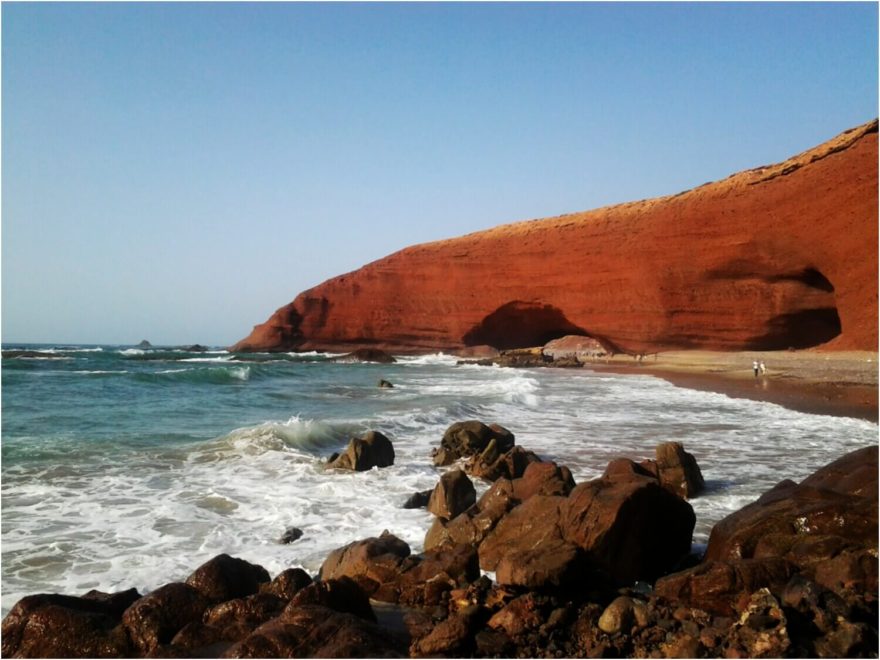
Between the small coastal towns of Mirleft and Sidi Ifni lies one of Morocco’s most iconic stretches of shoreline. Legzira Beach is famous for its dramatic red rock formations that rise directly from the cliffs, framing an eight-kilometer beach shaped by wind and waves.
The highlights are the massive stone arches carved into the cliffs by thousands of years of Atlantic erosion. At low tide, visitors can walk beneath these enormous natural gates, which glow in deep shades of red and orange. Standing below them reveals their true scale as they tower over the beach like monuments. However, the landscape also shows its fragility. In 2016, one of the largest arches collapsed, leaving only a field of sandstone fragments—a reminder of the ocean’s constant force.
Despite its reputation, Legzira remains surprisingly natural. There are no large hotel complexes or promenades. Instead, a few small guesthouses and simple restaurants sit at the base of the cliffs, preserving a manageable and laid-back atmosphere. While tour groups visit during the day, the beach becomes remarkably quiet by late afternoon. The wide shoreline makes it easy to find solitude even in busier months. Here, the experience focuses entirely on the elements: the red cliffs, the Atlantic horizon, and the steady sound of the surf.
Collapse of the rock arch at Legzira Beach
Until September 2016, Legzira Beach was known for two enormous rock arches standing close together along the cliffs. These formations had been shaped by centuries of erosion as the Atlantic slowly carved tunnels into the sandstone.
Eventually, the relentless force of the ocean took its toll. In the autumn of 2016, one of the arches suddenly collapsed. The dramatic structure that once dominated the bay’s end disappeared within moments, leaving a wide field of red stone debris scattered across the beach.
Even though the loss was significant, Legzira did not lose its appeal. The remaining arch still stands prominently in the water, continuing to define the beach’s unique scenery. It has become the central landmark of the coastline and remains one of the most photographed natural sights in southern Morocco.

Beyond the famous rock formations, Legzira also attracts visitors looking for outdoor activities. The steady Atlantic winds make the area suitable for paragliding, while the strong waves occasionally draw surfers to the beach. Guided quad tours along the cliffs are another popular way to explore the surrounding coastline.
Nature may have changed the appearance of Legzira over time, but the atmosphere and raw beauty of this stretch of coast remain just as powerful as before.
Accommodation at Legzira Beach and nearby
A staircase from the parking area above the cliffs leads directly down to Legzira Beach. At the bottom, daily life unfolds around just a handful of small establishments clustered near the shoreline. A few cafés and restaurants sit almost directly by the water, many of them known for freshly grilled fish served with a clear view of the Atlantic waves.
The bay itself remains very simple. There are no shops in Legzira, so groceries and other supplies need to be arranged in advance in the nearby towns of Mirleft or Sidi Ifni.
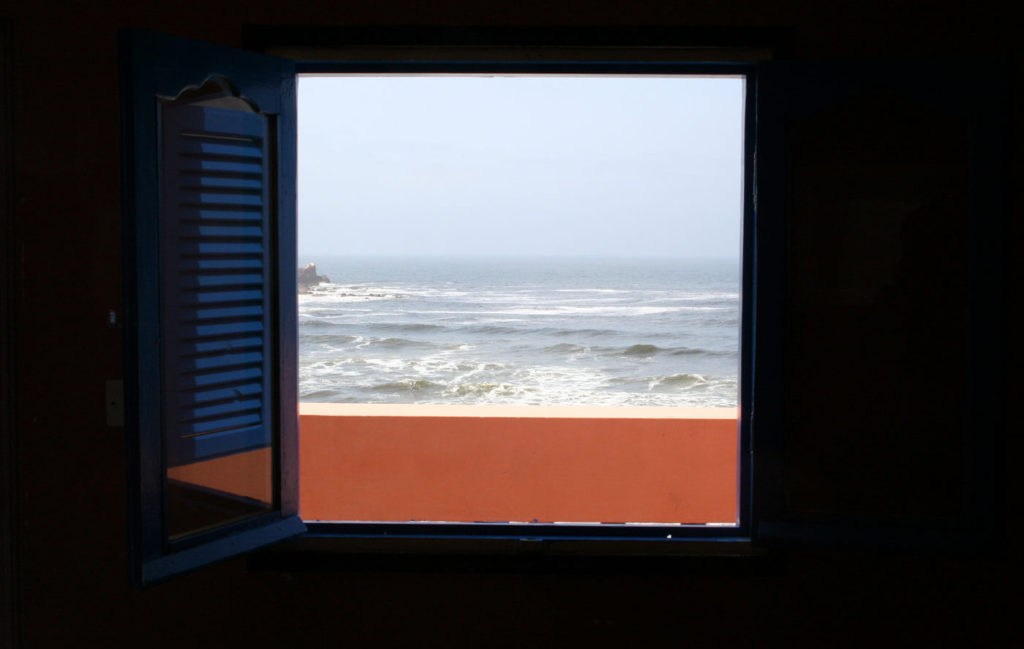
Accommodation options are limited and usually run as small, family-operated guesthouses. Travelers who want to stay directly by the sea can find rooms with Atlantic views at Auberge Sable d’Or, Hotel Beach Club Legzira, or Hotel Pieds dans l’Eau. These modest places offer one main advantage: their location right above the beach.
| Auberge Sable D’Or | |
| Hotel Beach Club Legzira | |
| Kasbah Legzira |
There is also a small surf shop in the area where visitors can rent equipment suited to the rough Atlantic waves. Spending the night here allows you to experience Legzira at its quietest moments. Early in the morning and after sunset, once most day visitors have left, the bay often feels almost empty.
Things to do in Legzira
The best way to explore the coastline is on foot. A walk along the cliffs reveals the dramatic landscape that makes Legzira so well known. From the small cluster of houses near the beach access, it takes roughly thirty minutes to reach the remaining rock arch and the scattered debris of the collapsed formation.
This walk is only possible during low tide. At high tide, the Atlantic pushes right up against the cliff wall, blocking the passage along the beach.
In the evening, the atmosphere changes noticeably as the setting sun intensifies the cliffs’ deep red tones. Around that time, you will often see local fishermen casting their lines from rocky outcrops along the shore.
The steady wind conditions along the eight-kilometer bay also make it favorable for surfing. Visitors looking for a more elevated perspective sometimes take advantage of the thermal winds along the cliffs for paragliding flights, while others explore the surrounding tracks on guided quad tours.
Excursions around Legzira
If the quiet setting of Legzira starts to feel a little too secluded, two nearby coastal towns offer worthwhile day trips.
Sidi Ifni (10 km)
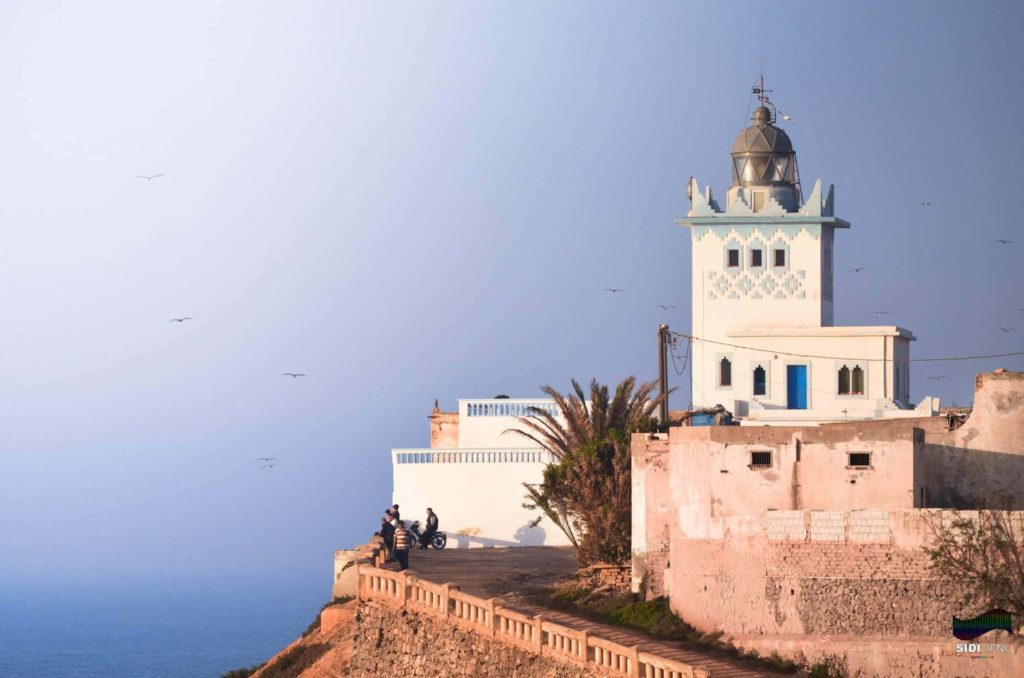
Sidi Ifni remained under Spanish administration until 1969, and that history still shapes the town’s appearance today. Whitewashed buildings with blue doors and several well-preserved Art Deco structures from the 1930s create a distinctive Spanish-Moroccan architectural mix.
Notable buildings include the former Admiralty building, the lighthouse, the Governor’s Palace, and the former cathedral, which now houses the local courthouse. Above the coastline, the broad esplanade runs along the cliffs, offering sweeping views across the Atlantic.

Mirleft
Mirleft is considerably smaller and quieter than Morocco’s better-known coastal cities, such as Agadir or Essaouira. The town is known for its hidden coves, many of which can only be reached via steep footpaths leading down from the cliffs.
One highlight is the ruined Fort Tidli, which stands on a rocky headland overlooking the village and the surrounding coastline. Mirleft also serves as a starting point for excursions into the dry inland valleys, where small oases appear along seasonal riverbeds in the otherwise arid landscape.


Getting to Legzira Beach
Reaching Legzira Beach from Agadir usually involves a drive south via Tiznit toward Sidi Ifni. By car, the journey takes roughly three hours. Along the way, the elevated coastal road offers several wide views of the Atlantic, making the drive itself part of the experience.
If you are already staying in Mirleft, the trip is much shorter. From there, Legzira lies about twenty minutes to the south. Travelers coming from Sidi Ifni need even less time, as the bay is located only about fifteen minutes north of town. A sign on the main road marks the turnoff toward Legzira. The road eventually ends at a guarded parking area located above the cliffs.
From the parking lot, a staircase leads down to the beach and the small cluster of restaurants and guesthouses near the shore.
Travelers without their own vehicle can use regional buses running between Tiznit and Sidi Ifni. If you choose this option, you can ask the driver to stop at the Legzira junction. From there, it is roughly a one-kilometer walk down to the beach.
For more active travelers, there is also the option of hiking directly from Sidi Ifni. At a steady pace, the walk takes just under two hours. The route follows sections of the cliffs and occasionally passes close to the waterline, offering beautiful coastal views along the way.
However, this hike requires careful timing with the tides. Some parts of the path become inaccessible at high tide, when the Atlantic reaches the base of the cliffs. Because the terrain can also be uneven in places, you should attempt this route only during low tide and with proper footwear.