
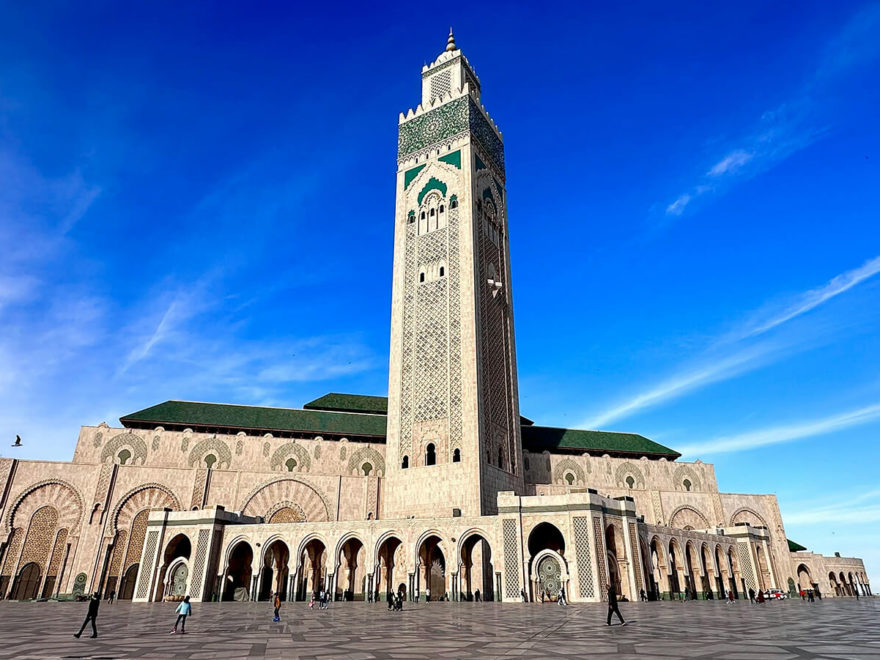
The Hassan II Mosque in Casablanca is far more than a religious building. It is a national symbol and, for many travelers, the main reason to visit Morocco’s largest city. Each year, hundreds of thousands of visitors from around the world come to see the mosque.
Contents
- 1 Construction and history of the Hassan II Mosque
- 2 Why is the Hassan II Mosque so special?
- 3 Architecture and technical highlights
- 4 The significance of the Hassan II Mosque for Casablanca and Morocco
- 5 Visiting the Hassan II Mosque in Casablanca
- 6 Organized tours and day trips
- 7 Frequently Asked Questions (FAQ)
Construction and history of the Hassan II Mosque
King Hassan II initiated the construction of the Hassan II Mosque in the early 1980s. He aimed to create a monumental landmark that would symbolize both faith and national unity. He laid the foundation stone on July 12, 1986. After seven years of construction, the state officially inaugurated the mosque on August 30, 1993.
A workforce of 35,000, including 6,000 master artisans, brought the King’s vision to life. Many of them contributed traditional Moroccan craftsmanship techniques, giving the building its distinctive artistic character.
From the beginning, however, the mosque’s financing sparked controversy. Initially, the government intended to fund the project through voluntary donations from the Moroccan population. Over time, however, officials introduced additional taxes and mandatory contributions. Many Moroccans perceived these payments as a heavy financial burden.
The construction phase also saw several serious workplace accidents, which further fueled criticism. Estimates of the total construction cost range between 400 and 700 million US dollars.
Protests continued even after the mosque opened. Critics repeatedly painted over the official inscription “Hassan II Mosque” with the slogan “Mosque of the People” to highlight the social debate surrounding the project.
Why is the Hassan II Mosque so special?
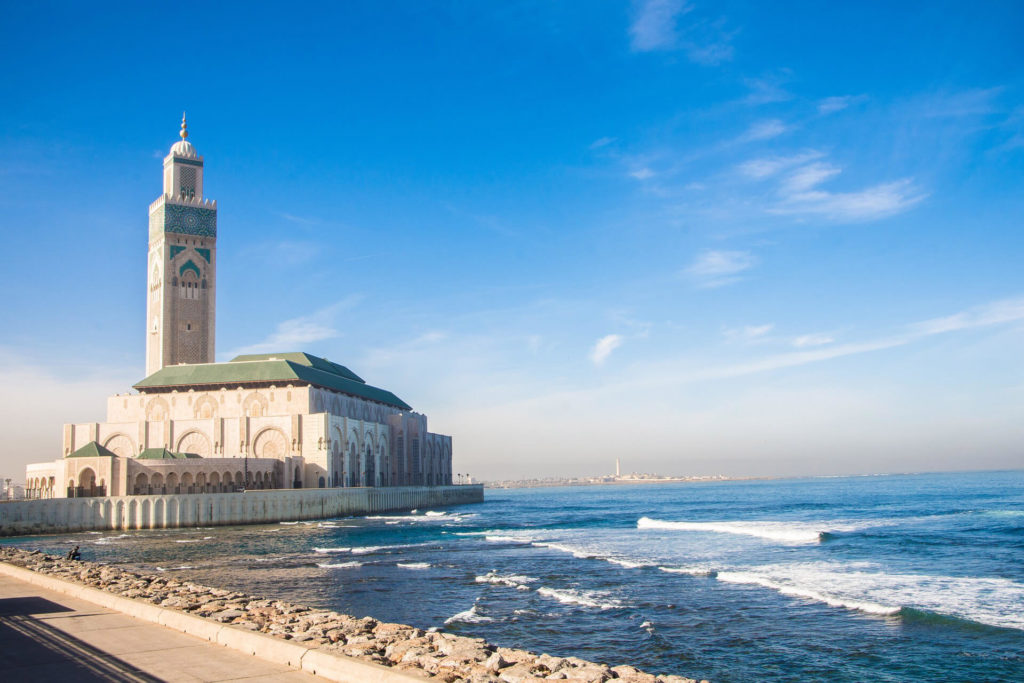
The Hassan II Mosque occupies a dramatic rocky outcrop directly above the Atlantic Ocean. This deliberate choice of location honors a Quranic passage: “God’s throne was upon the water.” The mosque’s design physically reflects this symbolic reference.
You will find the complex along Boulevard Sidi Mohammed Ben Abdallah, nestled between the port of Casablanca and the El Hank lighthouse. A 20-minute walk from the Casa-Port railway station brings you directly to the mosque.
While part of the complex rests on solid ground, another section extends over the sea on an artificial platform, replacing a former public swimming pool. Two massive breakwaters protect the structure from powerful Atlantic waves, which can reach heights of 10 meters during storms.
The exposed coastal setting also offers practical benefits. The mosque remains relatively shielded from urban noise and air pollution compared to central Casablanca. Instead, a constant Atlantic breeze refreshes the entire complex.
Architecture and technical highlights
The Hassan II Mosque stands as an architectural masterpiece, blending traditional Moroccan design with modern engineering. French architect Michel Pinseau designed the Moorish-Andalusian structure, while the French company Bouygues handled the construction.
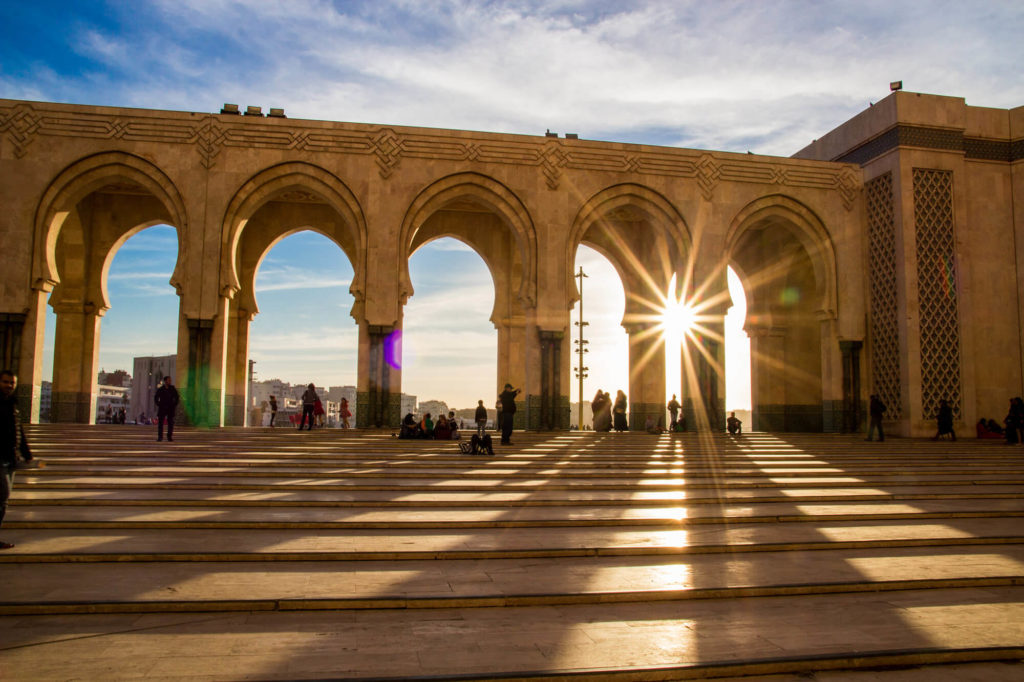
The heart of the complex, an enormous 20,000-square-meter prayer hall, accommodates 25,000 worshippers, while the surrounding courtyard holds an additional 80,000 people. Ranking among the world’s largest religious buildings, the mosque spans 200 meters in length and 100 meters in width. Its 210-meter minaret remained the tallest religious structure on Earth until 2019.
Technical features
- Nightly Laser: A green laser beam shines from the minaret’s peak toward Mecca, visible from up to 30 kilometers in clear weather.
- Retractable Roof: On pleasant days, the roof opens automatically to let in natural light and fresh sea air.
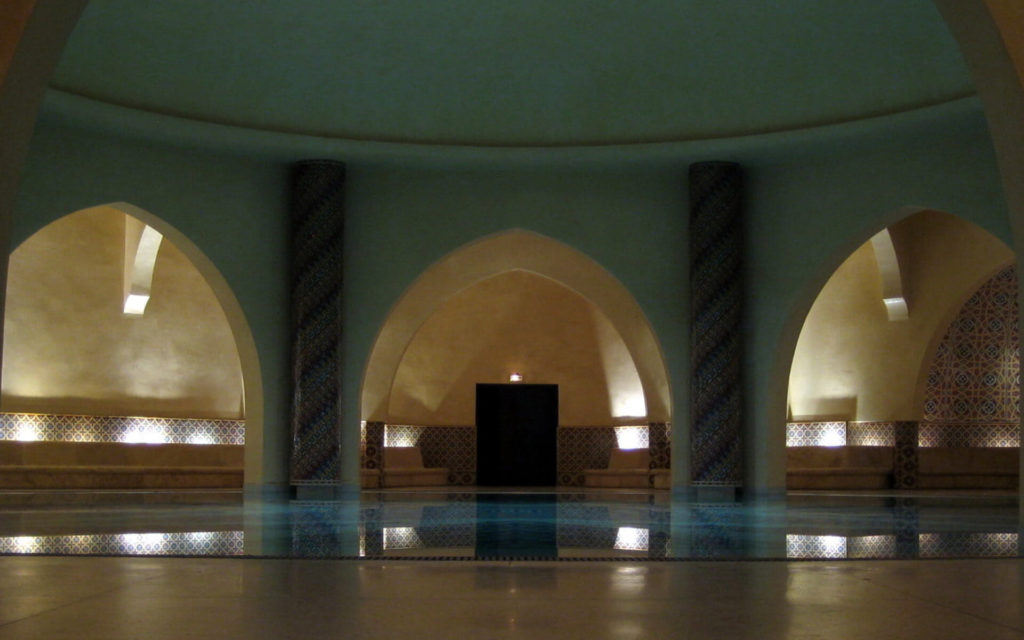
- Modern Comfort: An underfloor heating system maintains a consistent temperature, while glass floor sections offer direct views of the Atlantic Ocean below.
Materials and Craftsmanship
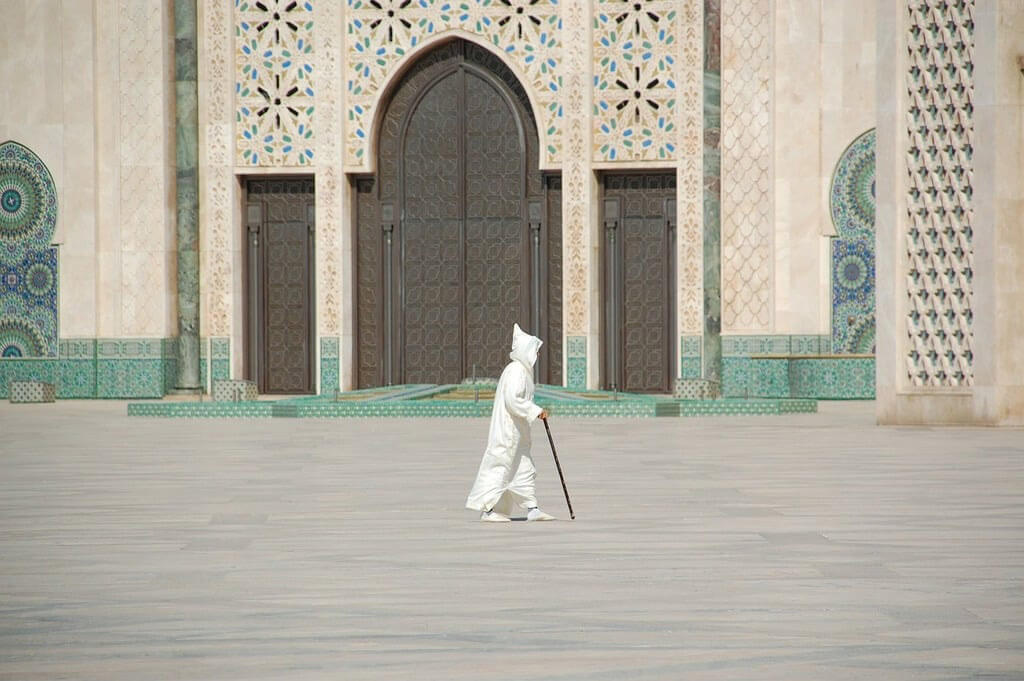
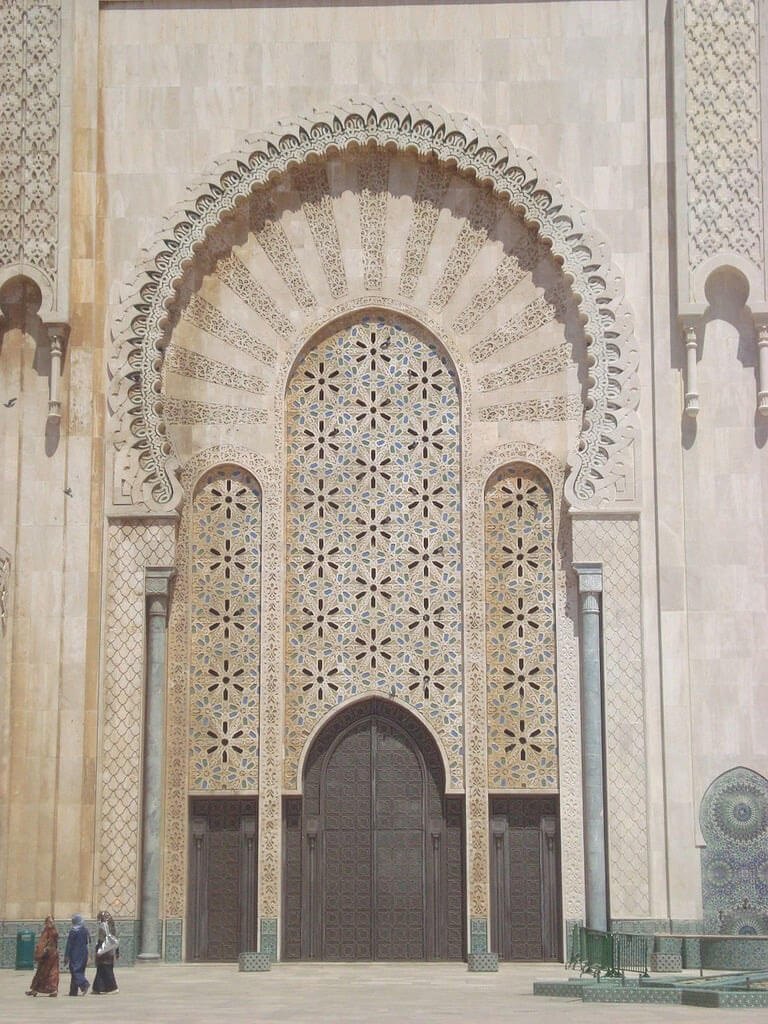
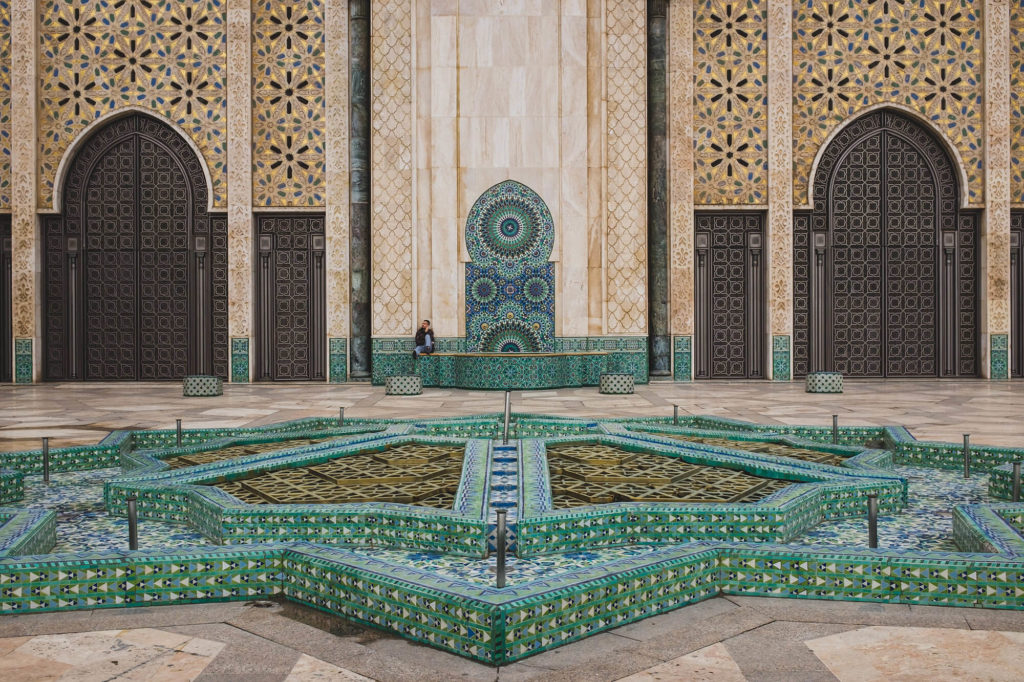
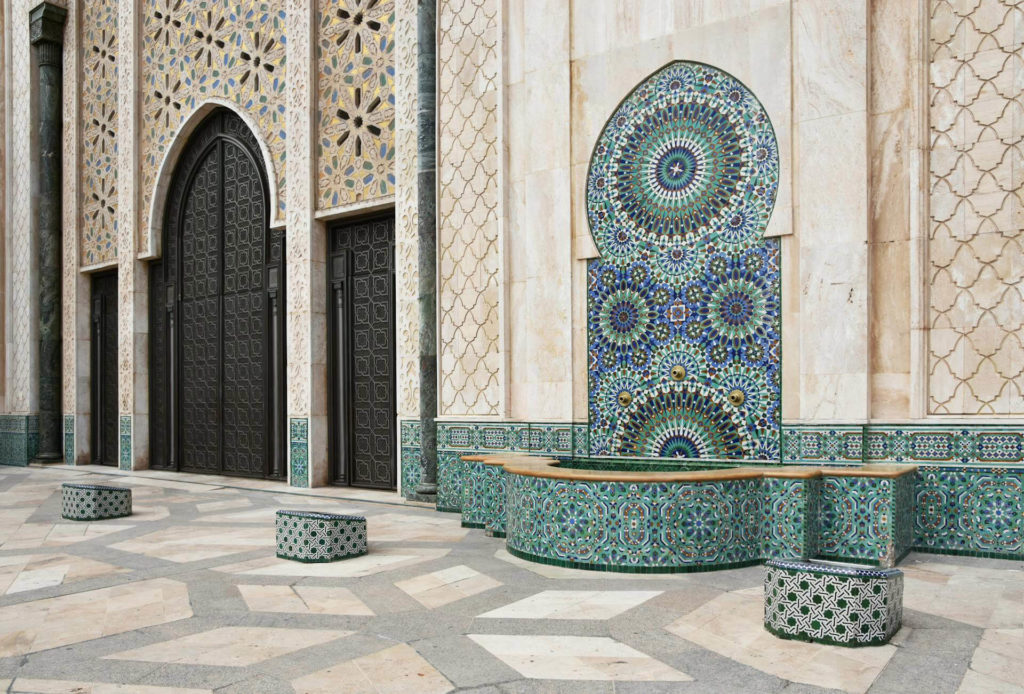
The project prioritized Moroccan materials: granite from Tafraoute, marble from Agadir, and hand-carved cedar from the Middle Atlas Mountains. While the project incorporated elements such as granite columns and 56 Italian chandeliers, Moroccan artisans handcrafted the intricate mosaics, carved ceilings, and gilded ornaments using traditional techniques.
Key dimensions and capacity
| Length | 200 m |
| Width | 100 m |
| Height of the minaret | 210 m (the highest in the world) |
| Prayer hall | 20,000 m², space for 25,000 worshippers |
| Courtyard | Space for 80,000 additional visitors |
| Total complex | 9 hectares |
The significance of the Hassan II Mosque for Casablanca and Morocco
The Hassan II Mosque represents the connection between tradition and modernity in Morocco. For many people, it symbolizes national identity, religious devotion, and the country’s role within the wider Islamic world. At the same time, the complex has become a place of dialogue and encounter, welcoming visitors from diverse cultures and religions.
Despite its impressive scale and global reputation, the construction of the mosque remains controversial among some Moroccans. Critics see it primarily as a prestige project of the monarchy rather than a necessity for the population.
Maintaining the building also presents ongoing challenges. Because the mosque stands directly on the Atlantic coast, the structure is constantly exposed to wind, salt, and humidity. These environmental factors place continuous stress on the materials, making regular restoration work essential.
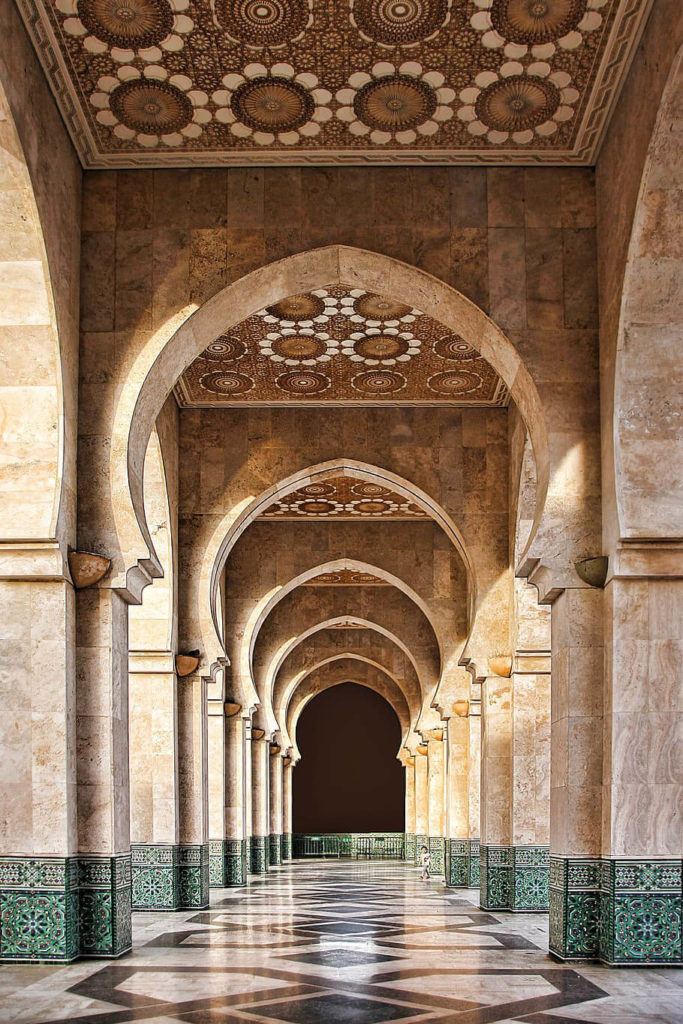
(Photo: Daniele Zanni via Flickr, CC BY-NC-SA 2.0)
Visiting the Hassan II Mosque in Casablanca
The Hassan II Mosque in Casablanca is the only mosque in Morocco that officially opens its doors to non-Muslim visitors. You can explore the interior through guided tours, which grant access to areas otherwise closed to the public.
The tours last about one hour and are available in several languages. They typically run daily (except Fridays) at 9:00, 10:00, 11:00, and 14:00. On Fridays—the most important day of prayer in Islam—the mosque usually limits tours to two time slots: 9:00 and 14:00.
International visitors pay an admission fee of roughly 130–140 Moroccan dirhams (around 12–13 euros as of 2025), while Moroccan citizens enjoy a reduced price.
The mosque expects visitors to dress appropriately. Clothing should cover the shoulders and knees, and women should bring a scarf to use as a head covering during the visit.
During the tour, you might witness the roof opening or walk across the glass floors mentioned above.
The entire mosque complex covers around nine hectares. You can visit the large forecourt freely without a ticket. The mosque museum and library welcome visitors from Tuesday to Saturday between 10:00 and 18:00.
Inside the minaret, a closed elevator takes you to an observation level offering impressive views of Casablanca and the vast Atlantic coastline.
Organized tours and day trips
Many tour operators offer “premium tours” that already include entrance tickets and a guided visit to the mosque. These packages often provide hotel pickup and transportation within the city.
Travel agencies in Marrakech also organize day trips to Casablanca. These excursions usually combine a city tour with a visit to the Hassan II Mosque and additional stops at well-known landmarks such as the Cathedral of Casablanca, the United Nations Square, and the beach district of La Corniche.
The journey from Marrakech to Casablanca takes roughly two hours by road. Prices for organized excursions often start at around 30 euros per person, making them a convenient way to experience both Casablanca and the Hassan II Mosque in a single day.
Frequently Asked Questions (FAQ)
The largest mosque in Morocco is the Hassan II Mosque in Casablanca. It is the second-largest mosque in Africa and is internationally known for its 210-meter minaret, the tallest in the world.
The Hassan II Mosque in Casablanca was officially inaugurated on August 30, 1993, after seven years of construction. The foundation stone for the project had already been laid on July 12, 1986.
The Hassan II Mosque can accommodate up to 105,000 people. The enormous prayer hall holds around 25,000 worshippers, while the surrounding courtyard and outdoor areas provide space for another 80,000 visitors.