
Toilets in Morocco aren’t always what you might be used to in Europe or North America. If it’s your first trip, it helps to be prepared for the variety of options, from modern, Western-style hotel bathrooms to simple squat toilets at bus stations or in desert camps. With a little preparation, you can avoid unpleasant surprises and travel with confidence.
Toilets rarely appear in guidebooks, yet they can make a real difference in your travel experience. Especially if you’re visiting Morocco for the first time, it’s useful to know what to expect: modern seated toilets in quality hotels, French-style squat toilets at bus stations, and sometimes improvised latrines in the mountains and the desert.
Cultural habits around bathroom use may also differ from what many travelers are used to. Water plays a major role in manual cleansing. The left hand is traditionally considered unclean, and toilet paper is often disposed of in a bin rather than flushed. This article provides a clear overview to help you stay relaxed and well-prepared wherever your trip takes you, whether in Northern or Southern Morocco.
Contents
What types of toilets are common in Morocco?
In Morocco, your restroom experience depends entirely on your surroundings. While modern, Western-style seated toilets are now standard in hotels, upscale restaurants, and private homes, you’ll still frequently encounter traditional squat toilets throughout the country.
Squat toilets – the “classic” version
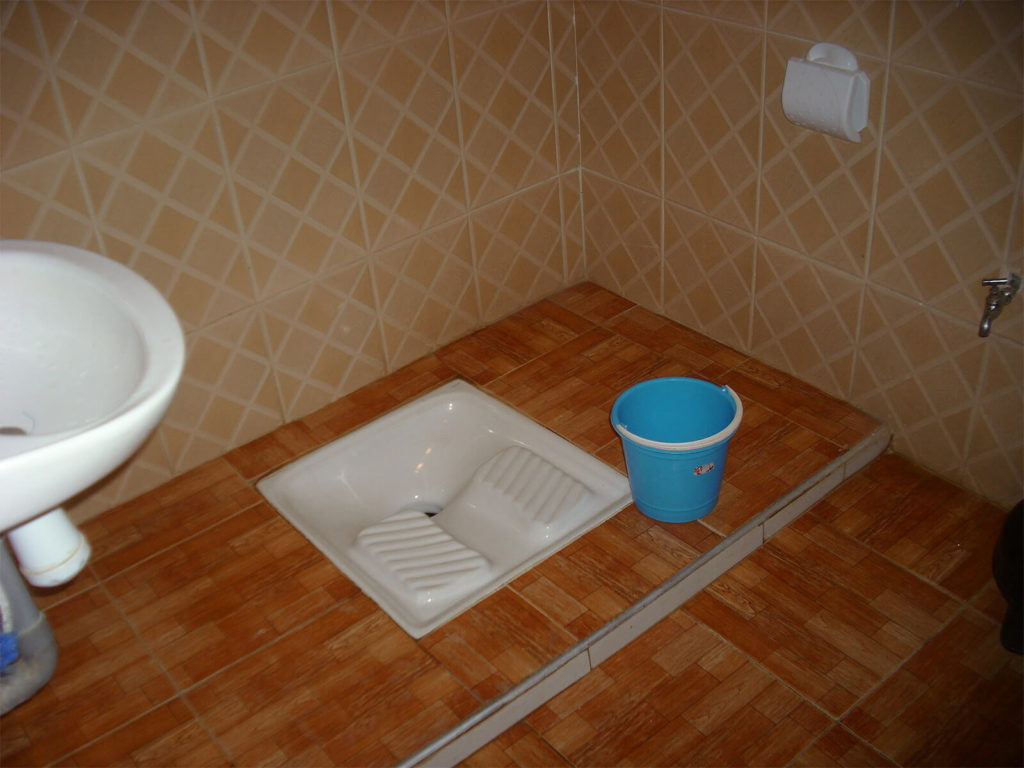
The so-called French squat toilet is still widespread in Morocco and has a long history. The term “French” dates back to the colonial period, when this toilet style was introduced to the country. It consists of a ceramic platform with a central opening and specific foot markings to guide your positioning.
For many travelers, this type of toilet feels unfamiliar at first. However, it does come with advantages. Since your body never comes into contact with the surface, it’s often considered more hygienic than a shared seat. Health experts also suggest that squatting supports a more natural and physiologically beneficial bowel movement compared to sitting.
You’ll mainly find these squat toilets in older buildings, traditional guesthouses, rural areas, public rest stops, bus terminals, and sometimes in remote mountain or desert locations. That said, don’t assume they are always basic or dirty. In fact, some are surprisingly elegant, made from marble or even decorated with ornate details.

How to master the squat toilet
If you’re using one for the first time, here’s how it works:
- Lower your pants to your knees and roll up long pant legs so they don’t touch the floor.
- Place your feet firmly on the designated areas on either side of the opening.
- Squat down deeply so your body is directly above the opening, usually facing the door or the wall.
- If you struggle with balance, rest your hands on your thighs or wrap your arms lightly around your knees for support.
Consequently, while the posture may feel unusual, it is actually more efficient for your digestive system.
Tip: Leave your smartphone in your pocket or outside to avoid any clumsy accidents.
Depending on the setup, squat toilets either feature a standard flush or a manual system. In the second case, you’ll find a small bucket or scoop to pour water down the drain and rinse the platform. Once finished, wash your hands thoroughly. Therefore, always carry hand sanitizer or a small bar of soap, as these essentials are often missing in rural or public rest stops.
Seated toilets – standard in hotels and modern buildings
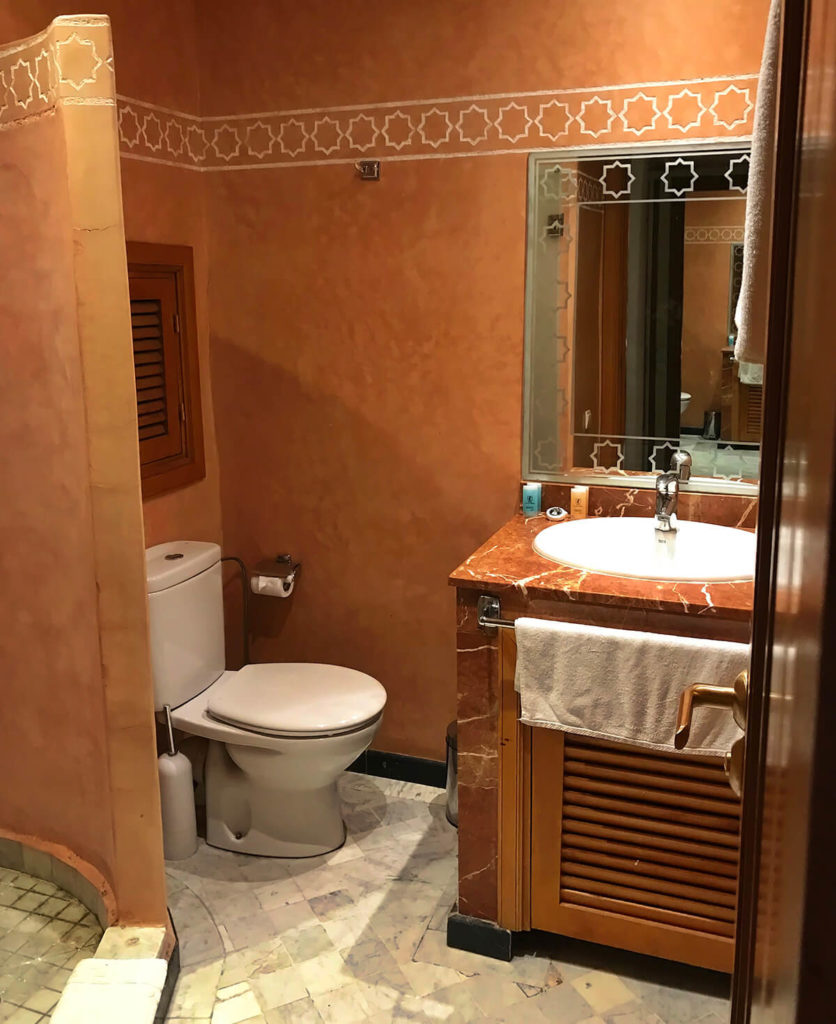
Western-style seated toilets are now common across Morocco, especially in high-end hotels, riads, modern restaurants, shopping malls, and many private homes. In these settings, you can expect facilities that mirror European standards.
The more upscale the establishment, the more comfort you’ll find, often including bidets or handheld water sprayers. In major cities like Marrakech, Fez, or Meknes, modern bathroom facilities are standard in most tourist-oriented accommodations.
However, keep an eye out for a small waste bin next to the toilet. Because many Moroccan plumbing systems are sensitive, flushing toilet paper can cause major clogs. If you see a bin, use it for your paper to keep things running smoothly.
Toilet paper in Morocco – essential knowledge
Using a restroom in Morocco might feel slightly different than back home. Nothing dramatic, but a few basic habits will make the experience smoother.
The most important point: Toilet paper is often not provided. Especially in public restrooms or simple restaurants, you’ll rarely find any. It’s smart to carry a small roll of toilet paper or a pack of tissues with you at all times.
Crucially, remember the disposal rule: Do not flush used paper, wet wipes, or paper. These items do not dissolve easily, leading to serious blockages. Instead, dispose of them in the provided waste bin. If you run out of supplies, don’t worry. You can easily buy toilet paper at “hanuts” (small neighborhood shops) found on almost every street corner.
Cleaning with water and the “left-hand” rule
Beyond toilet paper, water plays a central role in hygiene in Morocco. Nearly every toilet is equipped with a water hose, a handheld sprayer, or at least a tap nearby.
Traditionally, cleaning is done with the left hand. Because of this, the left hand is considered “impure” in daily Moroccan life. To show respect for local customs, avoid greeting others or eating with your left hand. Understanding this small detail will help you navigate social interactions with confidence and avoid awkward moments.
Toilet standards in Moroccan hotels
Bathroom standards vary significantly depending on where you stay:
- Upscale hotels &traditional riads: Expect European standards, including soap, paper, and modern sprayers.
- Solid three-star hotels & well-rated riads: Facilities are generally clean and seated, although they may offer more basic water installations.
- Budget accommodations & unclassified guesthouses: You may encounter squat toilets here, and you should bring your own toilet paper and soap.
If comfort matters to you, it’s worth paying close attention when booking and not just choosing based on price.
Public toilets in Morocco
If you’re out and about in Morocco and need to use a public restroom, be prepared for varying conditions.
In tourist-oriented restaurants and cafés, toilets are usually decent and reasonably clean. In small, local eateries or traditional tea houses, however, facilities can be very basic, and cleanliness may not always meet Western expectations.
The best public restrooms are typically found in museums and exhibition spaces. They are generally well-maintained and often equipped with Western-style seated toilets. A different picture awaits you at bus and train stations. The facilities there are functional but often not particularly clean, and squat toilets are common. Toilet paper is rarelyavailable. Before longer journeys, it’s a smart move to use the restroom at your hotel or just before departure.
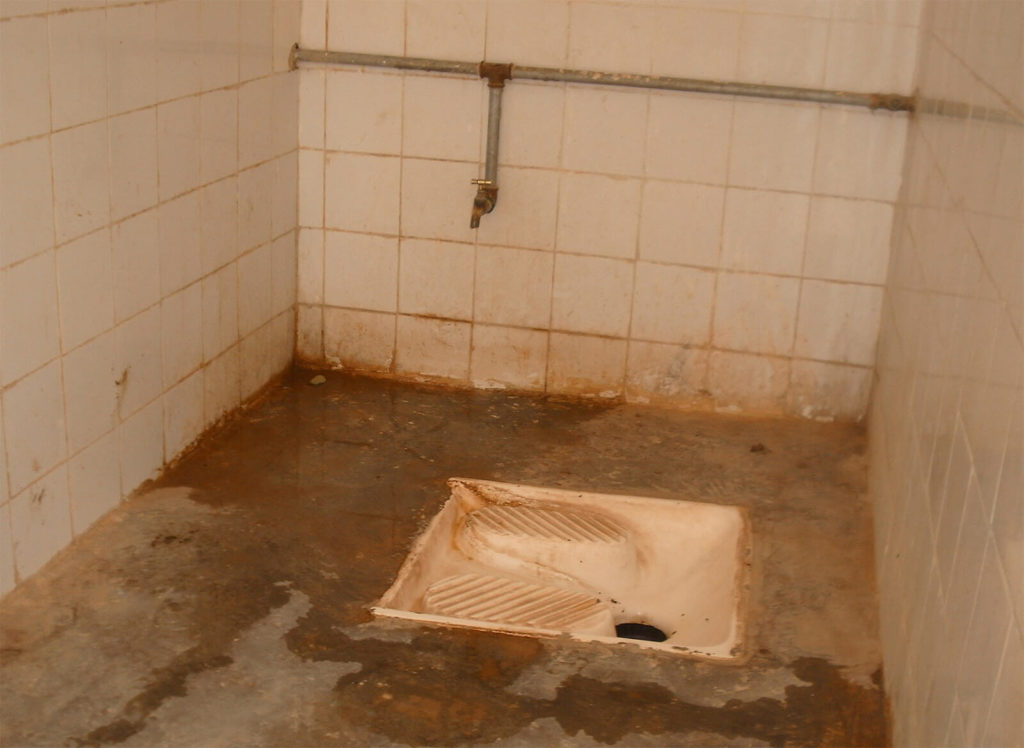

Rest areas along highways can also vary significantly. Some are modern and well-maintained, while others are simple and less inviting. On longer trips, it’s always a good idea to carry a small bottle of hand sanitizer or disinfectant wipes.
Toilets in nature
When you head into the Sahara or the Atlas Mountains, you should prepare for rugged conditions.
In desert camps or mountain huts, facilities are often improvised, such as basic latrines or simple pits. Running water and modern installations are rare, so you’ll definitely need your own toilet paper and hand sanitizer.
Environmentally speaking, responsibility is essential. If you must go while out in nature, stay far away from water sources to prevent contaminating drinking water or harming the ecosystem. Always take your trash with you.
Six practical tips for the road
- Use good opportunities: If you see a clean restroom in a museum or hotel, use it! You never know when the next one will appear.
- Always carry paper: Toilet paper is not guaranteed. A backup roll is a lifesaver.
- Don’t forget disinfectant: Hand sanitizer or hygiene wipes are non-negotiable travel essentials.
- Go before long journeys: Always use the restroom before boarding a bus or taxi.
- Book the comfort: If bathroom standards are a priority, check recent hotel reviews specifically mentioning the facilities before booking.
- Prepare for nature trips: On desert tours or mountain hikes, keep a small bag for your used tissues to keep the Moroccan wilderness clean.