
You might be wondering: Is Morocco safe with kids? How does food work, or what about medical care? I can reassure you here—Morocco is, in many ways, a surprisingly straightforward and very family-friendly travel destination. From my own experience, I know how openly and warmly families are welcomed, whether in restaurants, at markets, or in taxis. This genuine hospitality plays a big part in helping you feel at ease quickly.
Of course, you’re stepping into a world that is more colorful, louder, and sometimes more chaotic than what you’re used to at home. But that’s exactly where the appeal lies—for kids as well as for adults. And many things turn out to be easier than expected: distances are often shorter, there are accommodations for every budget, and even when it comes to health concerns, you’ll usually find support without much trouble.
That said, it’s important to adapt your itinerary to your kids’ age and interests. With younger kids, a calmer stay—such as in Essaouira—is often the better choice. Older kids usually enjoy more variety and movement, so Marrakech, a trip to the Atlas Mountains, or even a night in the desert can be a great fit.
Traveling with kids in Morocco – encounters and practical tips
Traveling through Morocco with kids often makes the experience even more intense. You’ll find that many Moroccans react openly and warmly to families. People are attentive and helpful, showing genuine interest. Locals embrace kids as a natural part of everyday life and always make them feel welcome.
Especially in rural areas, small gestures are often enough to start a conversation. Women wave from their homes, kids walk alongside you for a bit, or someone might spontaneously offer figs or a piece of bread. Some encounters feel almost casual, yet they tend to stay with you for a long time.
Someone may hug your child spontaneously or give them a small gift. For shy kids, this might feel unfamiliar at first. A short explanation beforehand is often enough to ease any uncertainty and help them adjust.
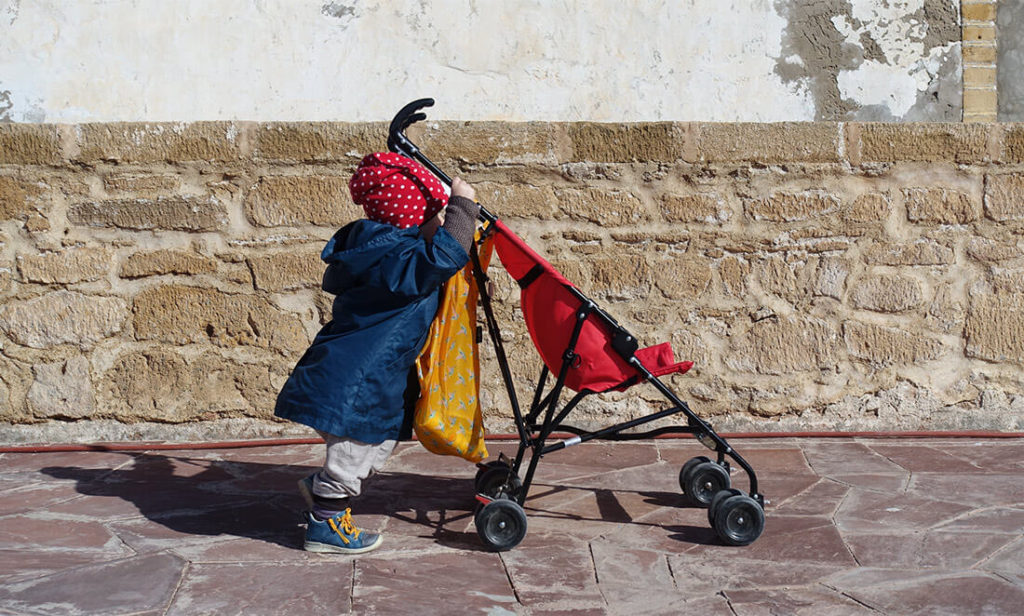
There are a few practical things to keep in mind: changing facilities are rare, whether at airports, in restaurants, or even in hotels. Breastfeeding is generally not an issue, although finding a quiet corner and using a light scarf can provide a bit more privacy.
Strollers can also be difficult to use in cities. Many sidewalks are uneven, curbs are high, and ramps are not always available. Baby carriers or slings are usually the more practical option, especially for train rides or excursions off the beaten path.
Facts and general travel tips for Morocco
Before you wander through the alleys of Marrakech or drive through the Atlas Mountains, it’s worth getting familiar with a few practical basics. Good planning is especially helpful when traveling in Morocco with kids.
Language
Arabic is the official language, and many Moroccans also speak one of the Berber languages. In everyday situations, French will get you the farthest. English is less common, especially outside major tourist areas.
Currency
The local currency is the Moroccan dirham (MAD). You can easily exchange euros at exchange offices, airports, or in cities. ATMs are reliable and usually work with standard bank cards, although fees may apply. A travel credit card with free withdrawals is often the most convenient and cost-effective option. Mobile payment services like Apple Pay or Google Pay still play a very minor role in daily life.
Entry requirements – passport only
Important: you need a valid passport to enter Morocco—this also applies to babies. The passport must be valid for at least six months upon arrival. A national ID card is not sufficient. For families with dual citizenship, there’s a specific detail to note. If kids with a Moroccan father enter the country accompanied only by their mother, a written consent from the father is required. Border officials pay close attention to this.
Health and medical care for kids in Morocco
In Moroccan cities, medical care is generally good—often even comparable to European standards, as many doctors have studied in France or Spain. In more rural areas, options are more limited, but you can usually still find a doctor or a pharmacy for basic support. Pharmacies are well stocked, and over-the-counter medications such as pain relievers and treatments for coughs or stomach issues are widely available.
Prevention and hygiene
A basic health check before your trip is always a good idea. However, no additional vaccinations are strictly required for Morocco, as standard immunizations are usually sufficient.
When traveling with younger kids, hygiene becomes especially important: wash or disinfect hands regularly, peel fruit, and only drink water from sealed bottles. Tap water should be avoided—even for brushing teeth. A simple rule that works well is: “cook it, peel it, or forget it.” Keeping a small hand sanitizer within easy reach is always a good idea.
Travel medical kit and common issues
You should definitely pack a well-equipped travel medical kit. This should include a thermometer, electrolyte solutions, and medication for diarrhea.
Mild stomach issues are not uncommon when traveling in Morocco, especially for kids. Make sure they stay well hydrated, and opt for still water rather than sugary drinks. In more basic accommodations, you may occasionally come across squat toilets. These can take some getting used to for kids, but it’s usually not a problem if you prepare them in advance.
Heat and sun protection
The sun in Morocco is more intense than in Europe—even in winter—so proper heat management and effective UV protection are essential. This includes sunscreen, a hat, and sunglasses. During midday heat, plan for breaks in the shade. Also, keep in mind that temperatures can drop significantly at night in the Atlas Mountains or the desert.
Animals and rabies
You’ll often see stray cats and dogs in the streets, and while they might seem harmless, it’s important to keep kids at a distance. We can’t entirely rule out the risk of rabies, even if it’s uncommon, so head straight to a clinic for medical advice if your child gets scratched or bitten.
The situation is different with camels, mules, or donkeys, which you’ll encounter, for example, in Fes or in the Sahara. These animals are usually well cared for and regularly monitored, so the risk of rabies is generally not a concern here.
Safety when traveling with kids
Morocco is considered a safe travel destination. The political situation is stable, and for years, the government has focused on maintaining public order through a visible presence of police and security services. In cities like Marrakech, Rabat, or Agadir, you’ll often notice uniformed and plainclothes officers, especially around public spaces and tourist hotspots. These measures are not intrusive, but they do noticeably increase the sense of safety.
In reality, incidents involving Westerners almost never happen, even in the far-reaching Atlas Mountains or the desert. Reliable tour operators run safe desert trips, and Morocco maintains a clean record regarding tourist kidnappings. As long as you plan ahead, you can enjoy a night in a Berber tent or a hidden riad without a second thought.
Crime and practical safety tips
Compared to many European cities, crime rates in Morocco are relatively low. As everywhere, pickpocketing can occur occasionally, especially in markets or crowded areas. More common, however, are clever scams aimed at getting a few dirhams from tourists.
In the medina, keep an eye on your belongings, carry valuables close to your body, and avoid wearing flashy jewelry. Violent crime against tourists is extremely rare. What you’ll notice instead is how peaceful the public spaces feel, largely because Moroccans drink very little alcohol in public.
That said, the usual common-sense rules apply. Avoid dark, isolated alleys at night, especially in old town areas. Stick to well-lit and busy streets. Staying in accommodation close to the center makes it easier to get around and helps you feel safe even in the evening.
Traffic and other risks
Traffic in Morocco can feel chaotic by European standards. Pay close attention when crossing streets with your kids—even at pedestrian crossings. Traffic lights and right-of-way rules are not always strictly followed, and mopeds often appear suddenly.
In some cities, medinas are car-free—like in Essaouira—so you can explore the souks with kids in a relaxed way. Unfortunately, this is not the case everywhere. Parts of the Marrakech medina can be quite busy, and you’ll often need to step aside in narrow alleys to let motorcycles or scooters pass. This requires extra attention from parents.
In rural areas, sidewalks are often absent, so walking along roads requires extra caution.
Another topic to be aware of is stray animals, especially dogs. In tourist areas, they are usually harmless, but aggressive or sick animals do exist. It’s best to talk to your kids in advance about how to behave around animals and to avoid unnecessary contact.
Food in Morocco with kids
Moroccan cuisine is diverse and generally very family-friendly. Many dishes are mildly seasoned and work well for kids. Fresh flatbread is served with almost every meal and is usually a hit. Couscous is also a staple in many main dishes. One of the most typical meals—often loved by kids—is the tajine, a slow-cooked dish with vegetables and optionally meat, prepared in a clay pot. The spices are aromatic but usually not spicy.
Vegetarian options are widely available. In larger cities like Marrakech or Essaouira, many restaurants also offer international dishes. Pizza, pasta, and fries are commonly on the menu. Breakfast often includes pancakes, honey, jam, yogurt, cheese, and fruit. If you prefer something savory, you can add eggs, olives, or soft cheese. Many kids are also easily won over by the sweet pastries from Moroccan bakeries.
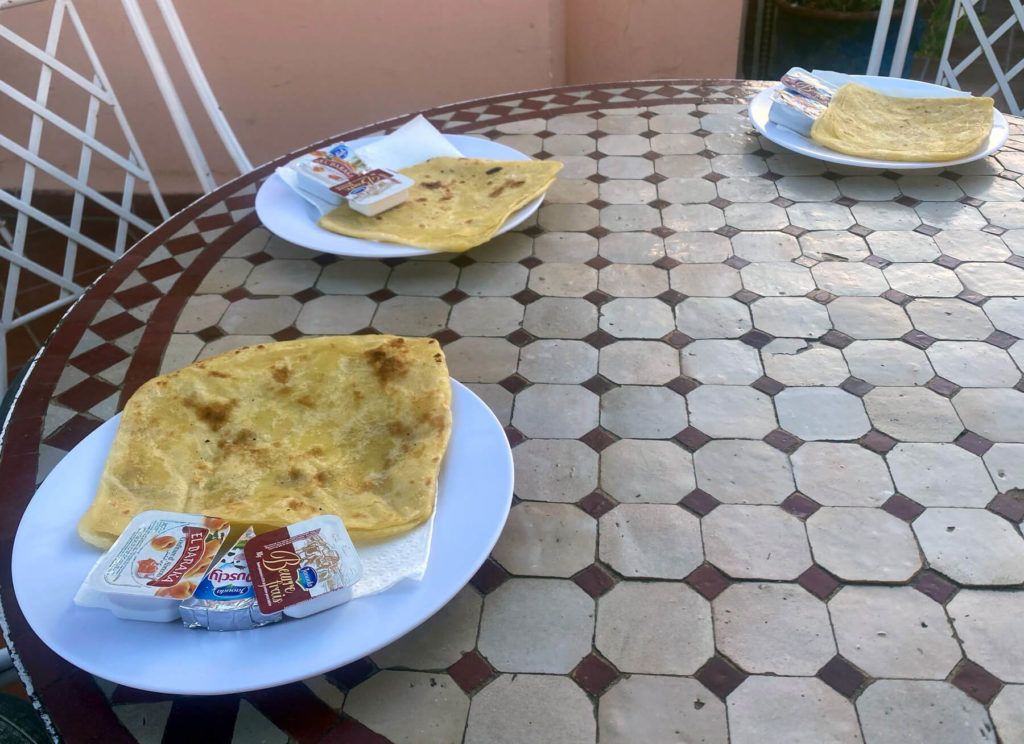
Sweet mint tea sits at the very heart of Moroccan food culture, and locals offer it almost everywhere as a warm gesture of hospitality. Since it contains green tea, it’s best for kids only in moderation or diluted due to the caffeine content. Alternatives like water, fruit juices, milk, and cocoa are widely available in supermarkets and local shops.
In many simple restaurants, high chairs are not available, but the staff is usually very attentive and helpful with kids.
Hygiene tips and tolerance
You can’t always avoid stomach issues when traveling through Morocco, but taking a few simple precautions will significantly lower your risk.
- Drinking water hygiene: Do not drink tap water. Use only bottled water, including for brushing teeth.
- Food hygiene: Avoid raw salads, especially at buffets or street stalls. Eat fruit and vegetables only if peeled or thoroughly washed. Freshly cooked dishes such as tajine, harira (lentil soup), couscous, or omelets are usually safe.
Best time to travel to Morocco with kids
The best time to visit Morocco with kids is generally in spring (April, May) and autumn (September, October). During these months, temperatures are pleasant across most regions, making it easy to plan activities. Cities like Marrakech, Fes, or Meknes offer ideal conditions—warm, but not too hot.
Morocco offers something special in every season, but keep in mind how much the weather varies across the country. During the peak of summer, the inland sun really packs a punch, with temperatures frequently soaring past 40°C. Especially in Marrakech or in the south around Ouarzazate, it can become too hot for kids. Desert tours are often not offered during this time.
Along the Atlantic coast, the situation is different. Places like Essaouira or Agadir benefit from cooling trade winds, keeping temperatures comfortable even in peak summer.
In winter (December to February), coastal areas remain mild, while inland regions can get quite cold, especially at night, with temperatures dropping below 10 °C. Many guesthouses provide extra blankets or heaters.
Traveling to Morocco during the winter holidays is absolutely feasible. In February, swimming in the Atlantic is often possible, and in Marrakech, daytime temperatures already feel pleasantly spring-like.
Traveling with kids during Ramadan
During Ramadan, daily life shifts in many places. Days are quieter, and some shops or restaurants open later or remain closed. In tourist areas, however, many restaurants stay open.
Once the sun sets and families break their fast, the cities transform into lively hubs of activity. You’ll find a unique magic in spots like Jemaa el-Fna that captivates both adults and kids alike. It’s the perfect time to visit if you’re looking for a truly authentic connection to Moroccan culture.
Family-friendly accommodation in Morocco
Your choice of accommodation has a big impact on your overall experience when traveling in Morocco with kids. Many hotels and riads offer special conditions for families. Infants under two years often stay free of charge. For kids between two and twelve, reduced rates are common—often around 50% of the adult price—if they stay in their parents’ room. Extra beds are usually easy to arrange.
If you value modern bathrooms, clean rooms, and reliable facilities, mid-range accommodations are a good choice. They typically offer more consistent standards than very basic options, without stretching your budget too much.
What to look for when booking hotels in Morocco
Family-friendly accommodations are not guaranteed everywhere, and during peak travel seasons, spacious riads with pools and large rooftop terraces can book out quickly. I recommend early reservation, especially if you have specific requirements.
Pay attention to:
- heating or air conditioning, depending on season and region
- spacious family rooms with enough beds
- pools for cooling off in warmer months
- rooftop terraces for extra space and views
Some accommodations offer high chairs or baby cots on request, but it’s best to confirm this in advance. If you’re traveling independently, platforms like Booking.com also list apartments with kitchens, which can be especially practical with younger kids.
Getting there and transport when traveling with kids in Morocco
The fastest way to reach Morocco from Europe is by plane. There are direct flights to many cities, including Marrakech, Agadir, Casablanca, Fes, Nador, and Rabat. Flight time is around four hours, and the cheapest connections are often to Marrakech and Agadir.
Alternatively, you can travel by car via Spain. Ferries run several times a day from Tarifa to Tangier, with a crossing time of about one hour—an option that works well for longer stays.
Getting around in Morocco with children: options and tips
Long overland journeys can be tiring for kids. Digital entertainment, audiobooks, or travel games can help pass the time. Even though the infrastructure is generally good, it’s still wise to bring snacks and drinks. Kids need regular breaks and small refreshments along the way.
Public transport
The rail network in the north is well developed. Traveling by train is a relaxed and relatively comfortable option for families. Kids can move around, and tables with seats are useful for games or drawing. Children under four travel free, while those aged four to eleven pay half fare. Family tickets with discounts are also available.
Long-distance buses and shared taxis (grands taxis) are relatively cheap but often the least comfortable option for kids, especially on longer journeys. Space is limited, air conditioning is not always available, and bathroom breaks are only possible during scheduled stops. Buses are also not always punctual, which can make bus travel in Morocco with kids more challenging.
Modern buses operated by CTM and Supratours offer a better experience. Air conditioning usually works, and schedules are more reliable.
Rental cars and private transfers
A rental car offers maximum flexibility, especially in regions with limited public transport. Roads are generally in good condition, but I do not recommend driving at night due to potholes, poor lighting, and animals on the road.
If you’re traveling with younger kids, arrange child seats in advance. They are not always available and are often more expensive than in Europe. Many taxis also lack suitable seat belts for installing child seats.
Private transfers are a very comfortable alternative—and often the best option when traveling with younger kids in Morocco, especially on fixed routes between cities or from the airport to your accommodation. You can usually request child seats or booster seats in advance. The journey itself is smooth and efficient, typically door-to-door, with the option to include stops for toilets, food, or short sightseeing breaks.
Marrakech with kids
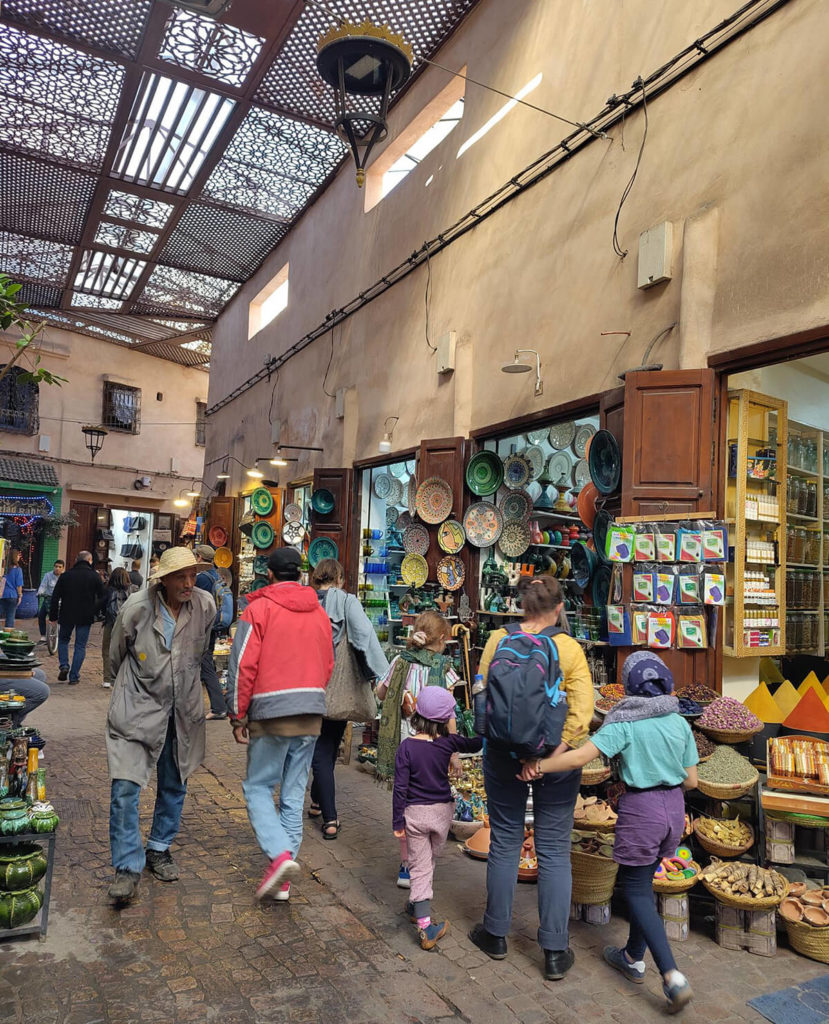
Marrakech is loud, colorful, and packed with impressions—a total thrill for kids. When you’re traveling as a family, you’ll find that staying calm makes all the difference. You really need to keep your eyes open in the medina, where mopeds constantly zip through the narrow alleys. Beyond the traffic, the sheer number of sensory impressions can also be quite exhausting. It’s a good idea to plan regular breaks so kids (and adults) can process everything.
Luckily, Marrakech offers plenty of places to slow down: lush gardens, small parks, shaded cafés, and restaurants with airy rooftop terraces, perfect for a short break.
Experiences for kids in the medina and at Jemaa el-Fna
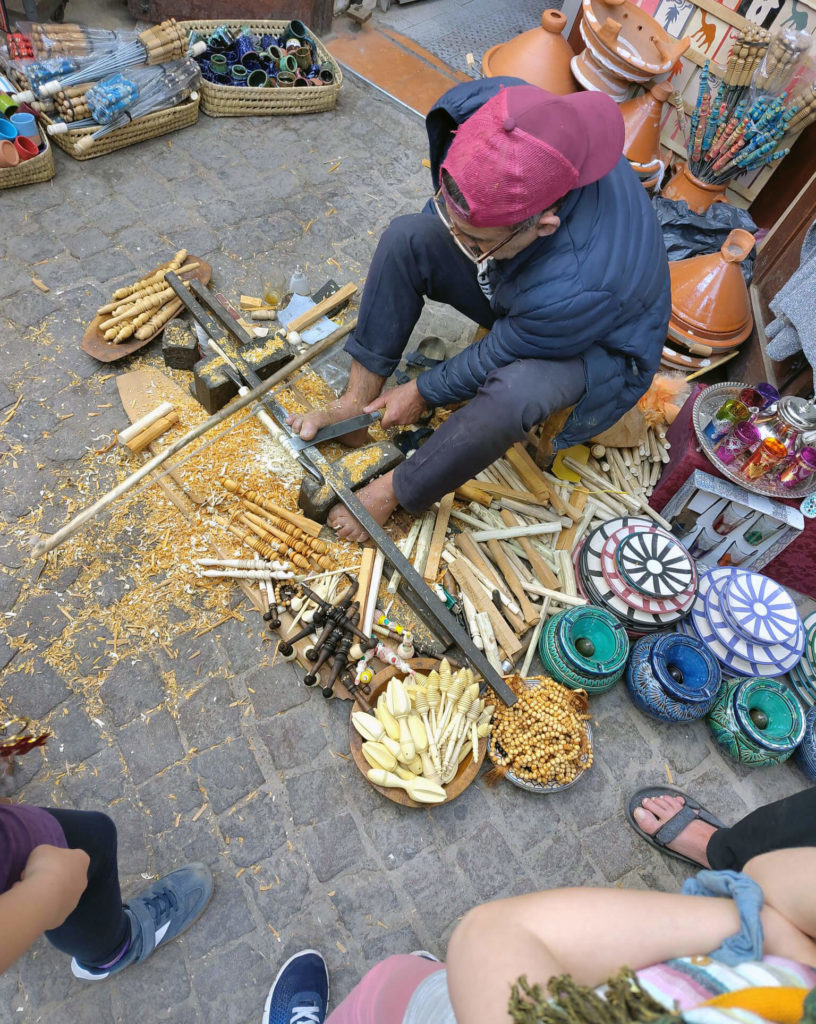
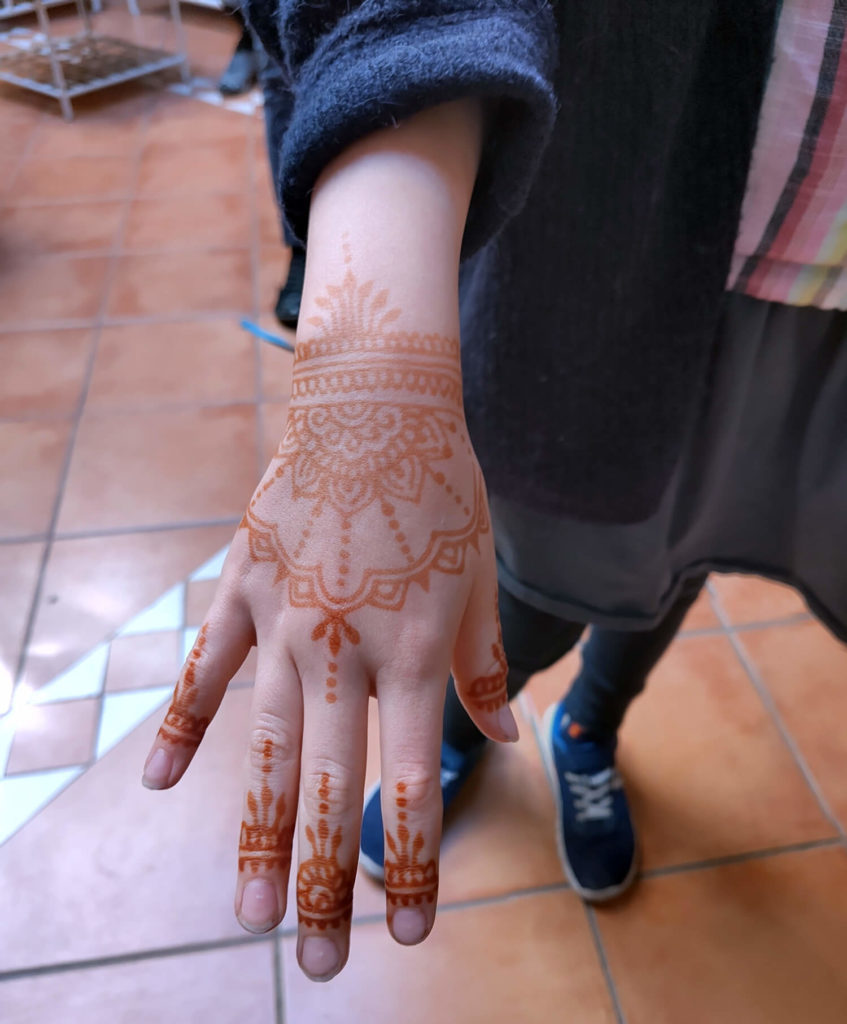
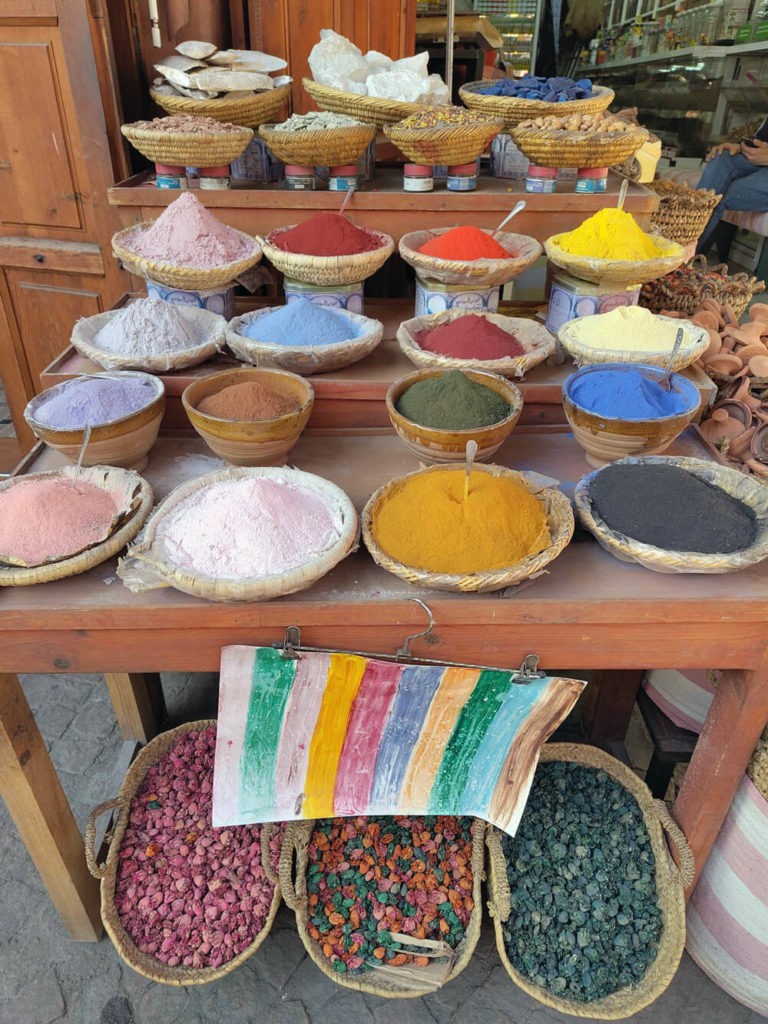
The souks offer endless magic for children. You’ll find spice stalls, colorful fabrics, and handmade treasures that turn every corner into an adventure. Simple things grab their attention here, like the way merchants still use traditional scales to weigh fresh fruit.
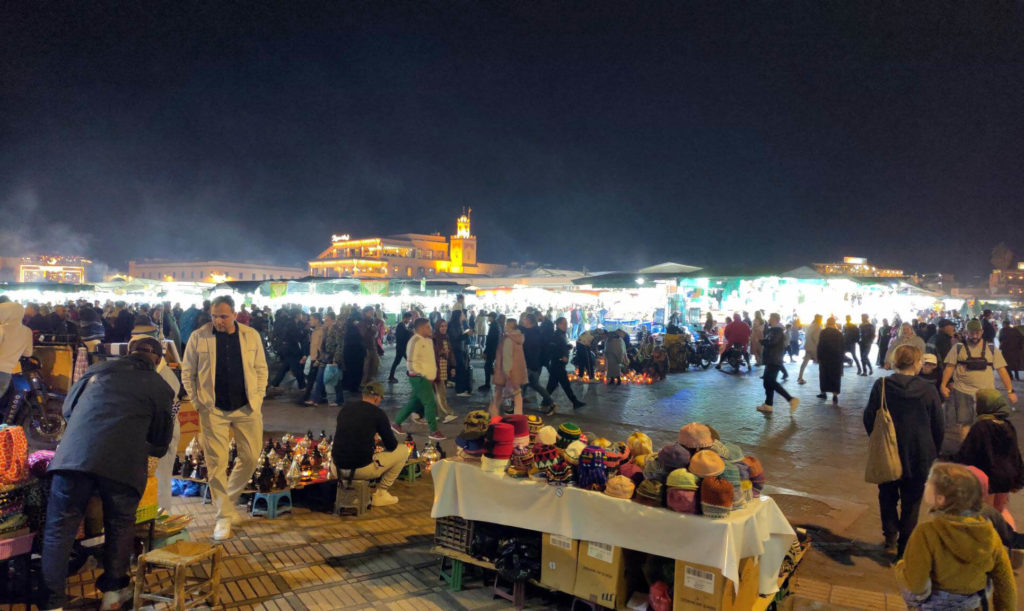
A visit to Jemaa el-Fna is worthwhile at any time of day. The square is most famous in the evening, when performers, musicians, and countless food stalls shape the atmosphere.
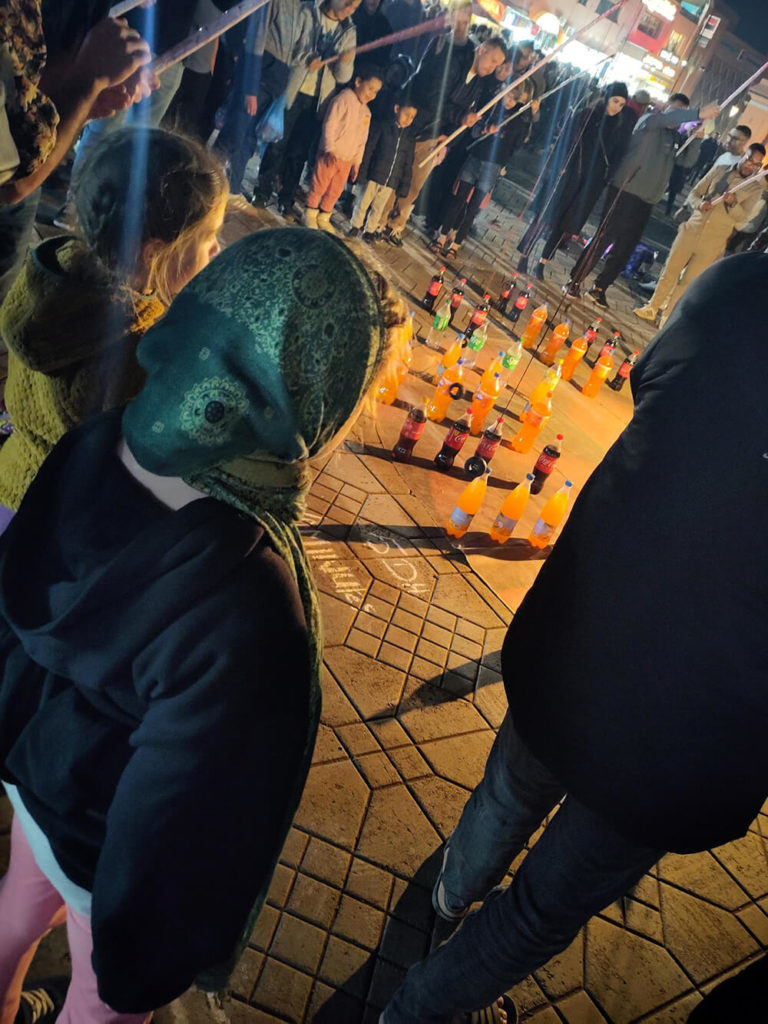
Kids often enjoy the small “bottle fishing” games on the edges of the square and watch snake charmers and storytellers with a mix of curiosity and caution. Overall, the souks tend to feel more lively and engaging for kids than classic monuments or museums.
Sights in Marrakech with kids
A visit to the Bahia Palace works well even with younger kids. The spacious palace, with its shaded courtyards and mosaics, is relatively calm—especially if you arrive right at opening time around 9 a.m. From there, it’s just a short walk to the Jewish cemetery, which makes for a brief stop.
The Menara Gardens offer plenty of space to move around. Carp swim in the large basin, which many kids enjoy watching. The gardens date back to the 12th century and are ideal for a relaxed walk through olive groves. The view toward the Koutoubia Mosque in the distance is impressive, and on clear days, you might even see the Atlas Mountains on the horizon.
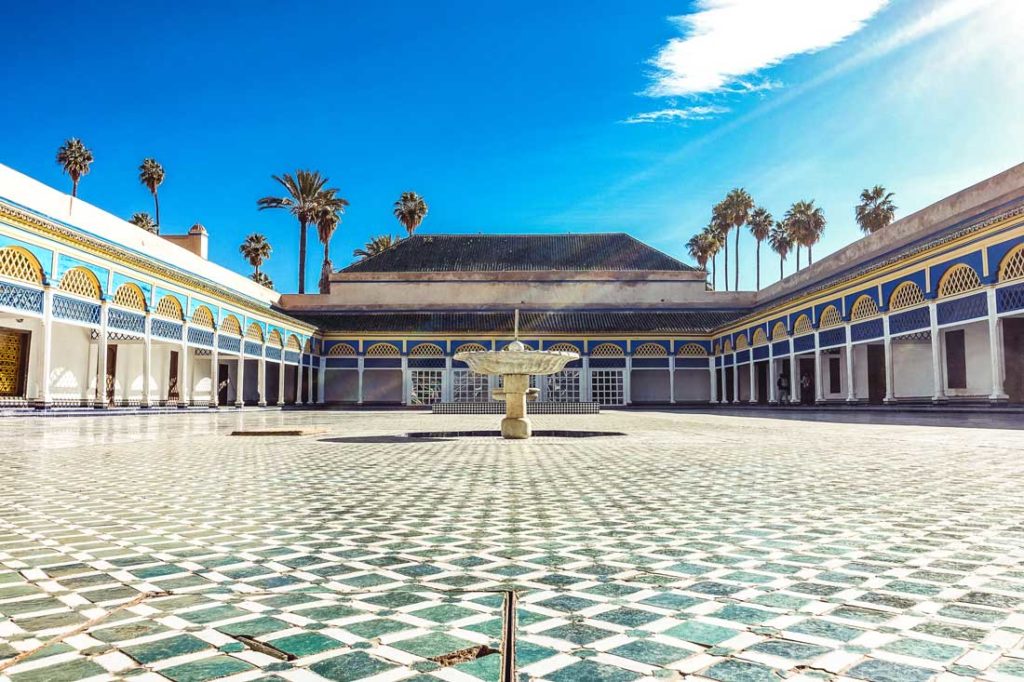
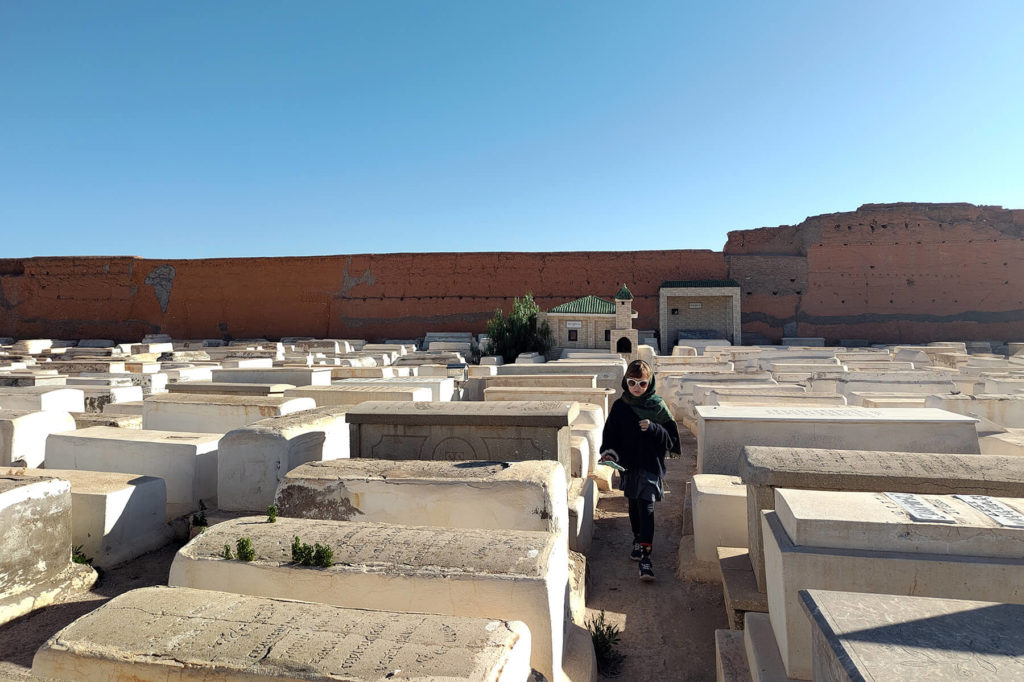
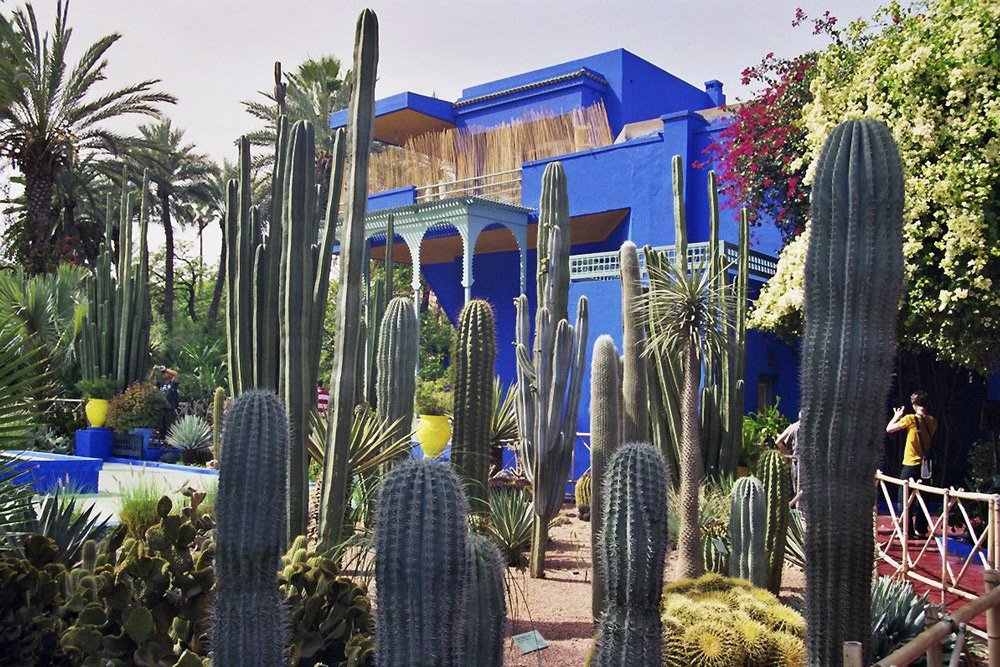
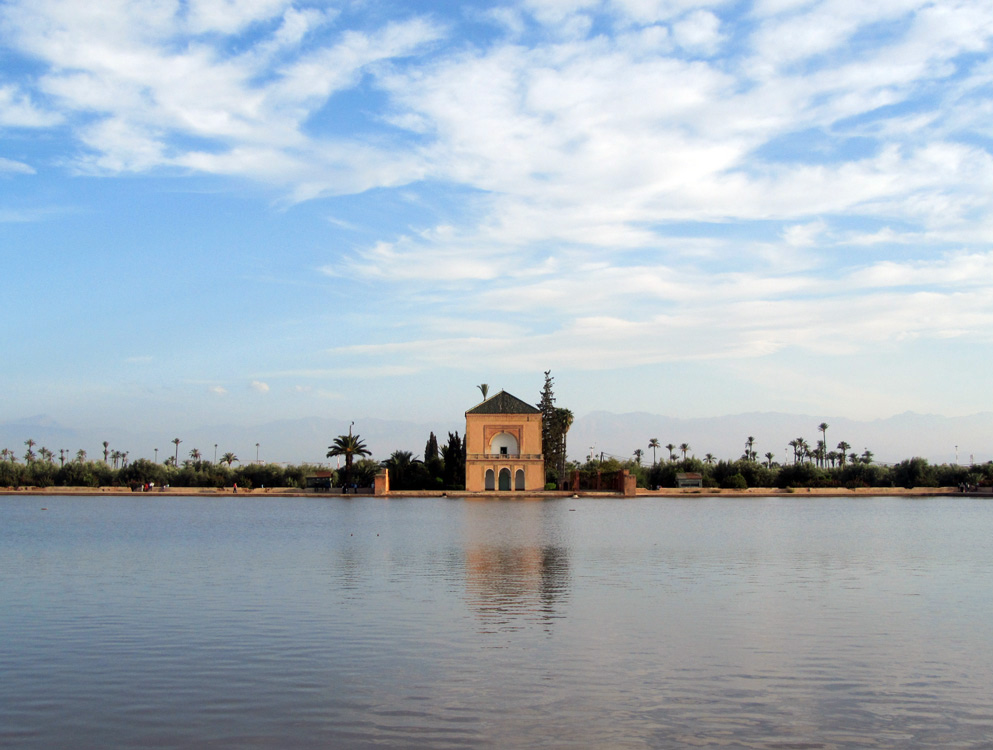
The Jardin Majorelle is one of the most famous sights in Marrakech, but it’s usually quite crowded, so waiting times can be challenging for kids. A quieter alternative is the Le Jardin Secret right in the medina. This smaller garden features water channels, plants, seating areas, and also has a restaurant—making it a more manageable stop with kids.
Family-friendly accommodation in Marrakech
Marrakech offers a wide range of accommodation options, from family-friendly riads in the medina to all-inclusive resorts in the Palmeraie.
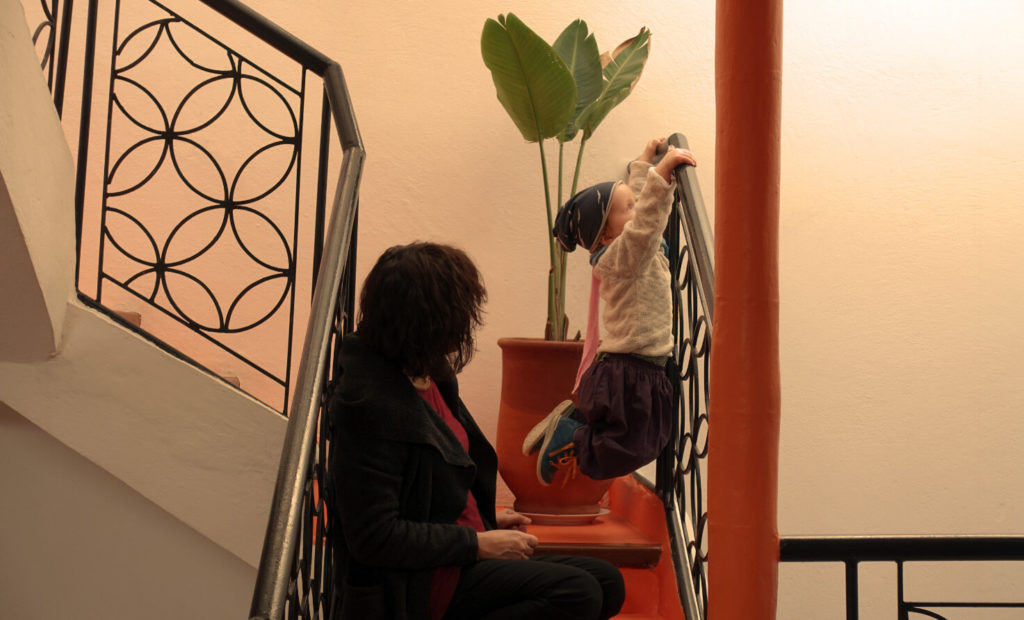
Swimming in Marrakech
If you’d like to go swimming in Marrakech and your accommodation doesn’t have a pool, the Palmeraie—a vast palm oasis north of the medina—offers many hotels and resorts. Many of them sell day passes, allowing you to use the pool, gardens, and restaurant facilities for a few hours without staying overnight.
Day trips from Marrakech with kids
Marrakech is an excellent base for family adventures, especially with older kids.
Desert
For a classic desert experience with dunes and starry skies, I recommend a longer trip to Merzouga, about 550 kilometers away. You’ll find family-friendly and comfortable desert camps there. The Sahara can easily feel like the world’s largest natural playground. Moroccan travel agencies offer private tours to the two main dune regions.
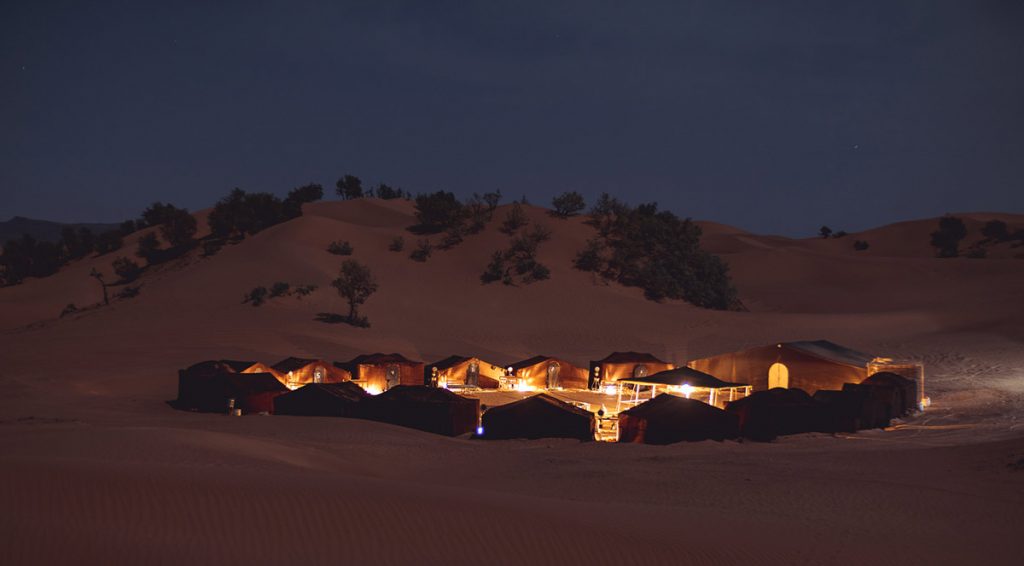
A much quicker option is the Agafay desert. This rocky desert landscape is only about 40 minutes by car from Marrakech. It also features some exceptionally luxurious camps where you can stay overnight directly in the desert.
Atlantic coast
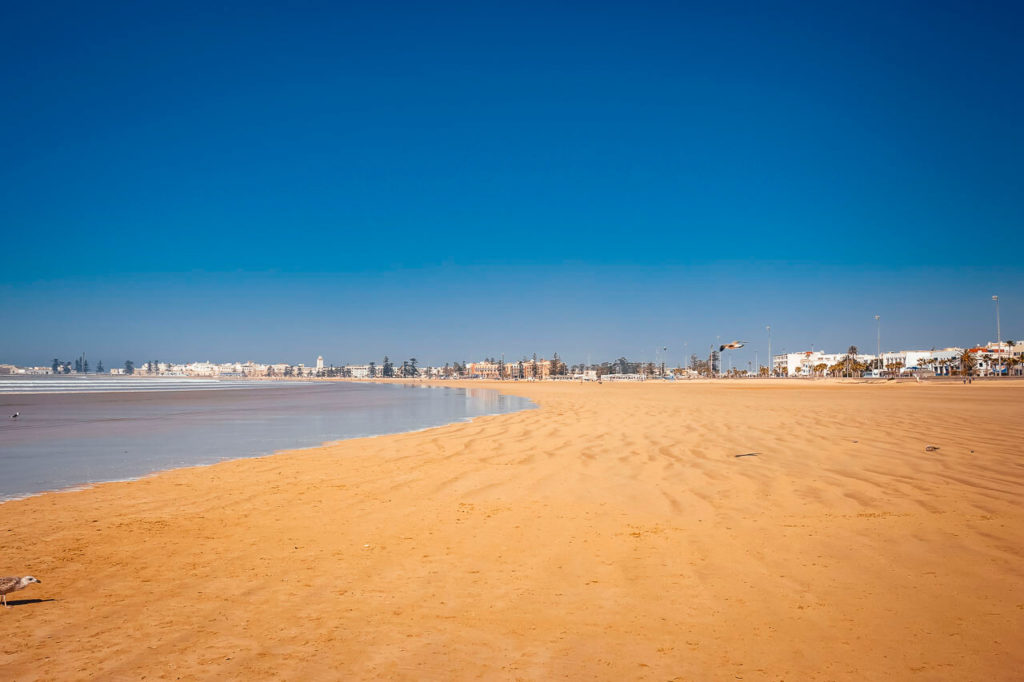
The Atlantic coast can be reached from Marrakech in just under three hours by car. While a day trip is technically possible, it’s not ideal—especially with kids. It’s much better to stay for a few days to make the journey worthwhile and explore the area. At the coast, kids have plenty of space to play, although swimming can be less suitable for younger children due to stronger waves.
Atlas Mountains
The Atlas Mountains are only about 90 minutes from Marrakech. In this spectacular landscape, day trips to places like Imlil or the Setti Fatma waterfalls are popular options. Longer trekking tours offer more immersive nature experiences—often including overnight stays in mountain lodges, baking bread over a campfire, or riding mules—memories that tend to last well beyond the trip itself.
Family vacation in the coastal town of Essaouira with kids
Essaouira is one of the best options for a family vacation in Morocco. This small coastal town on the Atlantic offers pleasantly mild temperatures year-round, even in peak summer, without extreme heat. Essaouira is located about two and a half hours by car from Marrakech.
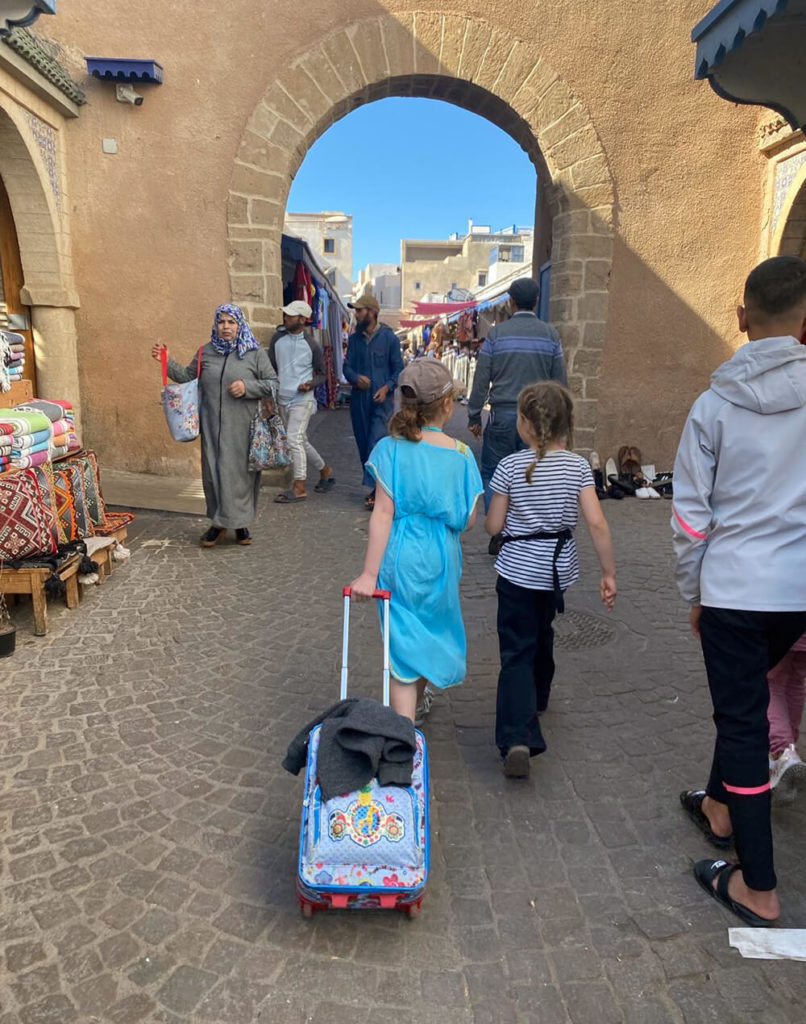
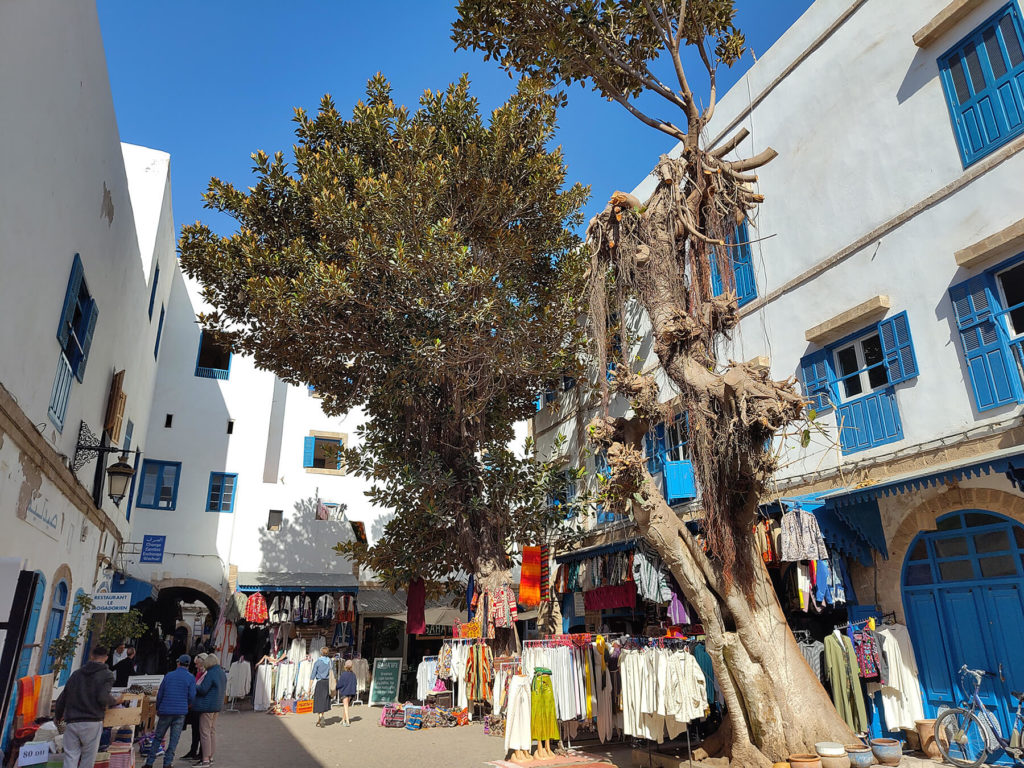
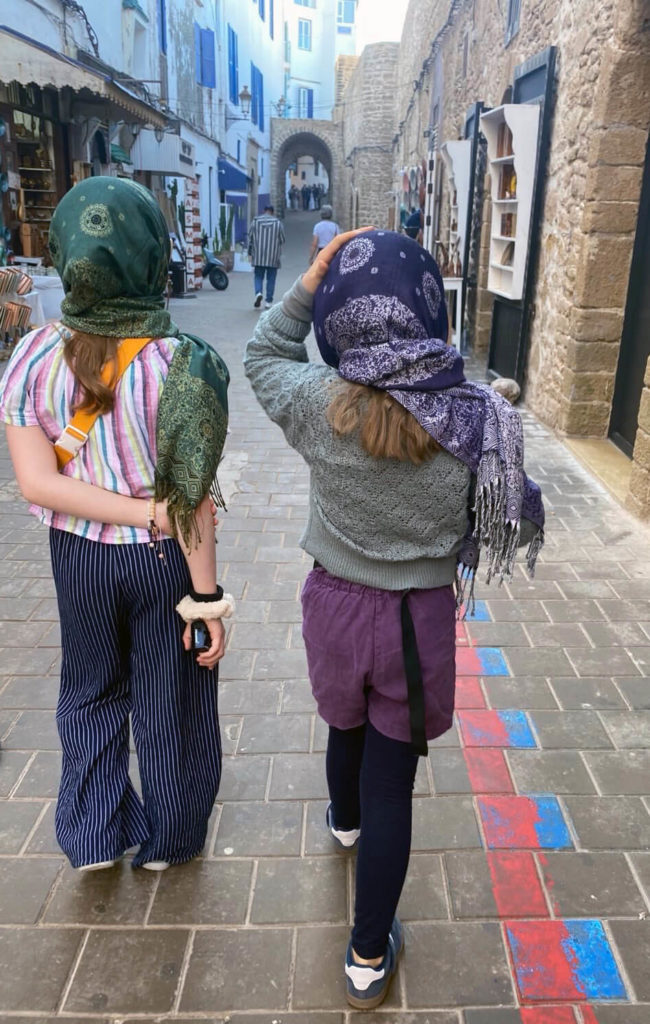
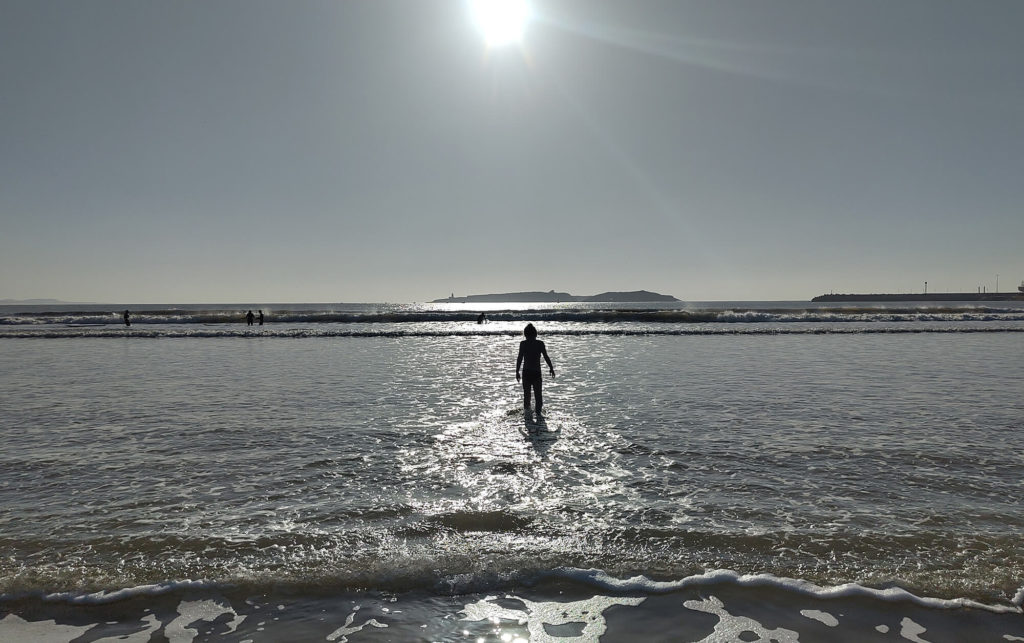
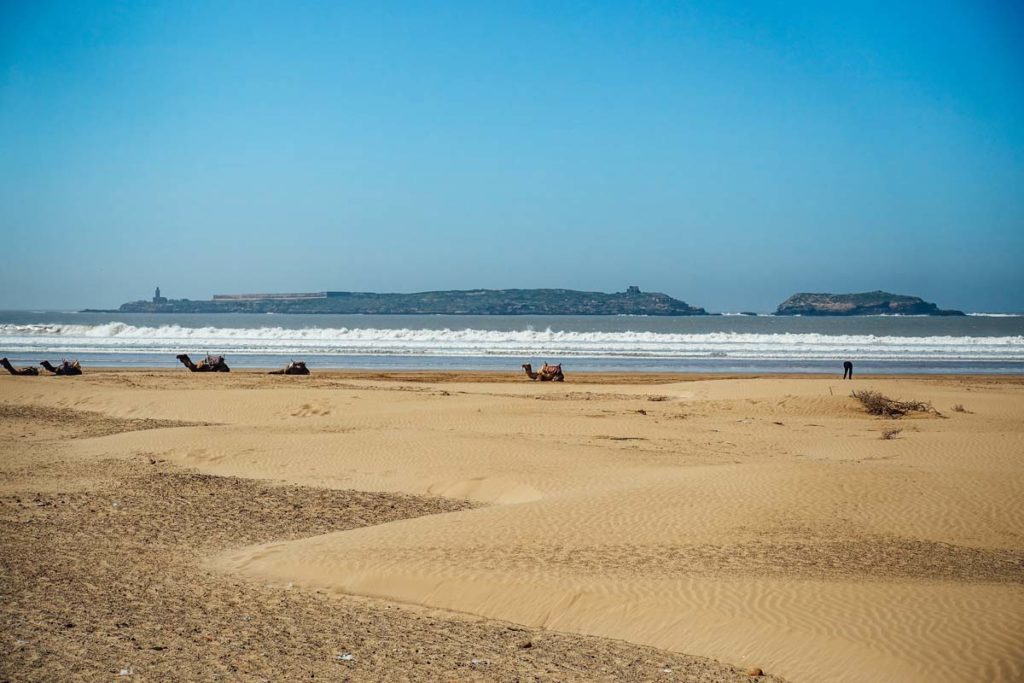
The town has a cosmopolitan feel, shaped by international surfers, creative expats, and cafés and boutiques. In the winding alleys of the car-free old town—listed as a UNESCO World Heritage Site—kids can explore freely. Compared to Marrakech, the souks here are calmer and less hectic, and the absence of traffic ensures much better air quality. The fresh Atlantic breeze also keeps temperatures comfortably moderate. Not without reason, Essaouira is often called the “Windy City.”
Two large beaches invite you year-round to swim, go kitesurfing, jog, ride camels, or simply take long walks. Surf schools offer beginner courses, including options for kids. For families, staying several days in a riad is highly recommended to experience Essaouira authentically.
Packing list for a trip to Morocco with kids
When packing for Morocco with kids, sun protection, medication, and specific care products should be your top priorities. Beyond that, the list doesn’t differ much from trips to other warm destinations.
Many everyday items—such as diapers, wet wipes, standard medications, and baby shampoo—are easy to find in larger cities. Disposable diapers are available in supermarkets and pharmacies at prices similar to those in Europe. In more remote areas, however, it’s wise to bring sufficient supplies or consider reusable diapers.
More difficult to find are specific brands, special sizes, or medical nutrition products. If your child has allergies, eczema, or other specific needs, you should definitely bring those items from home.
For toddlers who rely on specific baby food, I recommend bringing at least formula, as baby food is usually only available in larger cities. Dried baby food is a practical alternative, and cafés will typically provide hot water for preparation.
Also, make sure to pack weather-appropriate clothing—especially rain protection for trips to the mountains or regions with more variable conditions.
Additional packing list for Morocco with kids
This list complements a general Morocco packing list with items that are particularly useful or necessary when traveling with babies or kids. Use it as a guideline and adjust it based on your kids’ age, health needs, and your specific itinerary.
Care & hygiene
- Changing bag with portable changing mat
- Diapers in sufficient quantity (especially for special sizes or sensitive skin)
- Wet wipes (preferably sensitive)
- Barrier cream (e.g., for eczema)
- Nail scissors for kids
- Kids’ toothbrush & toothpaste
- Baby bath or gentle wash for sensitive skin
Food & drinks
- Formula or special nutrition (e.g., hypoallergenic, lactose-free)
- Thermos flask for hot water (for mixing)
- Leak-proof cup or baby bottle
- Bibs
- Familiar snacks (e.g., rice cakes, fruit pouches)
- Kids’ dishes & cutlery (e.g., soft-tip spoon)
Health & safety
- Digital thermometer for kids
- Fever and pain relief medication (e.g., suppositories or syrup)
- Rehydration salts/electrolyte powder
- Travel medical kit with child-specific medication
- Sun protection clothing (UV shirt, sun hat with neck cover)
- Insect protection for kids (spray from six months, mosquito net for stroller or bed)
- Portable mat for changing or play breaks on the go
- Lightweight mosquito net for travel cot
Equipment & comfort
- Baby carrier or child carrier backpack
- Compact stroller or buggy with sun/rain cover
- Fitted sheet in special sizes (for allergies or eczema)
- Swim diapers or a suitable flotation aid
- Portable blackout cover (e.g., for naps in the stroller)
Entertainment & daily routine
- Favorite stuffed toy, comfort blanket, or soothing toy
- Books, audiobooks, or small travel games
- Kid-friendly headphones
- Travel coloring book & pens
- Fidget toys or sensory toys (if needed)