
Many travelers wonder how to behave respectfully while still traveling comfortably. The good news is that Morocco does not enforce a strict dress code for tourists. However, clear cultural expectations do exist. In this guide, you’ll find everything you need to know about appropriate clothing for women and men, the right choices for religious settings, and tips for your packing list.
Morocco is a country of contrasts and diverse cultures, which shows in everyday street life. Choosing your outfit often feels like a balancing act between showing respect and staying cool in the heat. What feels perfectly normal in tourist hotspots like Marrakech or Agadir may quickly stand out in more conservative cities, such as Fez, or in rural areas.
The basic rule for a relaxed trip remains simple. You generally stay on the safe side by covering your shoulders and knees, avoiding tight or transparent clothing, and choosing breathable fabrics.
Contents
Between fashion freedom and respect
Although Morocco is a Muslim-majority country, it does not impose a legal dress code on visitors. There is no law requiring female tourists to veil themselves or wear traditional clothing. However, locals highly value modesty. Very short shorts, tank tops, and deep necklines appear rarely in everyday street scenes and may attract unnecessary attention, especially in conservative areas.
Keep in mind that clean, well-kept clothing makes a difference. People often view torn or overly worn outfits negatively, whereas a neat appearance signals respect for the local culture.
In the tourist districts of Marrakech, Agadir, or Essaouira, you’ll find a more relaxed atmosphere. Many visitors wear loose-fitting dresses or T-shirts with pants. In traditional medinas or rural areas, however, you should show more restraint. The general principle remains the same. The longer and looser your clothing, the better. Culturally appropriate choices include wide-leg pants, maxi skirts, or kaftans, all of which will keep you cool and comfortable.
Simple clothing guidelines for your trip
In cities and coastal areas, you usually only need clothing that covers your knees and shoulders. In rural regions and medinas, I suggest wearing long pants, three-quarter- or long-sleeved tops, and loose-fitting clothing. When visiting religious sites, you should cover your arms and legs. Women should also carry a scarf to cover their heads.
The goal is not to disguise yourself. Instead, you show respect through mindful choices. By choosing modest and practical outfits, you’ll feel much more comfortable and enjoy your stay in Morocco.
Clothing and climate: What to wear and when
Morocco’s climate varies significantly between the Mediterranean, the Atlantic, the Atlas Mountains, and the Sahara. Temperatures can change drastically between seasons and between regions. You will travel far more comfortably if you adjust your wardrobe to your specific destination.
Keep in mind that while coastal areas such as Agadir and Essaouira tend to have milder temperature swings, fluctuations in Marrakech or the Atlas Mountains can be dramatic. It’s advisable to check the forecast for your specific travel region before your departure.
Summer from June to September
Light and bright clothing made from natural materials such as linen or cotton is essential during these months. These fabrics allow better airflow, protect your skin against the sun, and absorb moisture well. A solid summer wardrobe includes a loose kaftan, wide-cut linen pants, and a scarf. A head covering will also protect you from the sun and signal your cultural awareness to locals.
Winter from December to February
Even in cities, evenings can become quite chilly in winter. In the desert or the Atlas Mountains, nighttime temperatures often drop below freezing. You should definitely pack a fleece jacket or a lightweight down coat, even if you walk around in a T-shirt and sandals during the day.
Spring and Autumn
The transitional seasons require flexibility for every traveler. Light clothing usually suffices during the day, but evenings often turn cool quickly. A scarf, a thin sweater, and a light jacket will help you comfortably manage these temperature changes.
What women should wear in Morocco
Women can dress both stylishly and respectfully while traveling through Morocco. The country is culturally diverse, and acceptance of Western clothing varies by specific region. In vibrant cities like Marrakech or Casablanca, you’ll feel perfectly fine in loose summer dresses as long as you cover your shoulders and knees. In more traditional areas or smaller towns, I recommend choosing longer and less figure-hugging clothing.
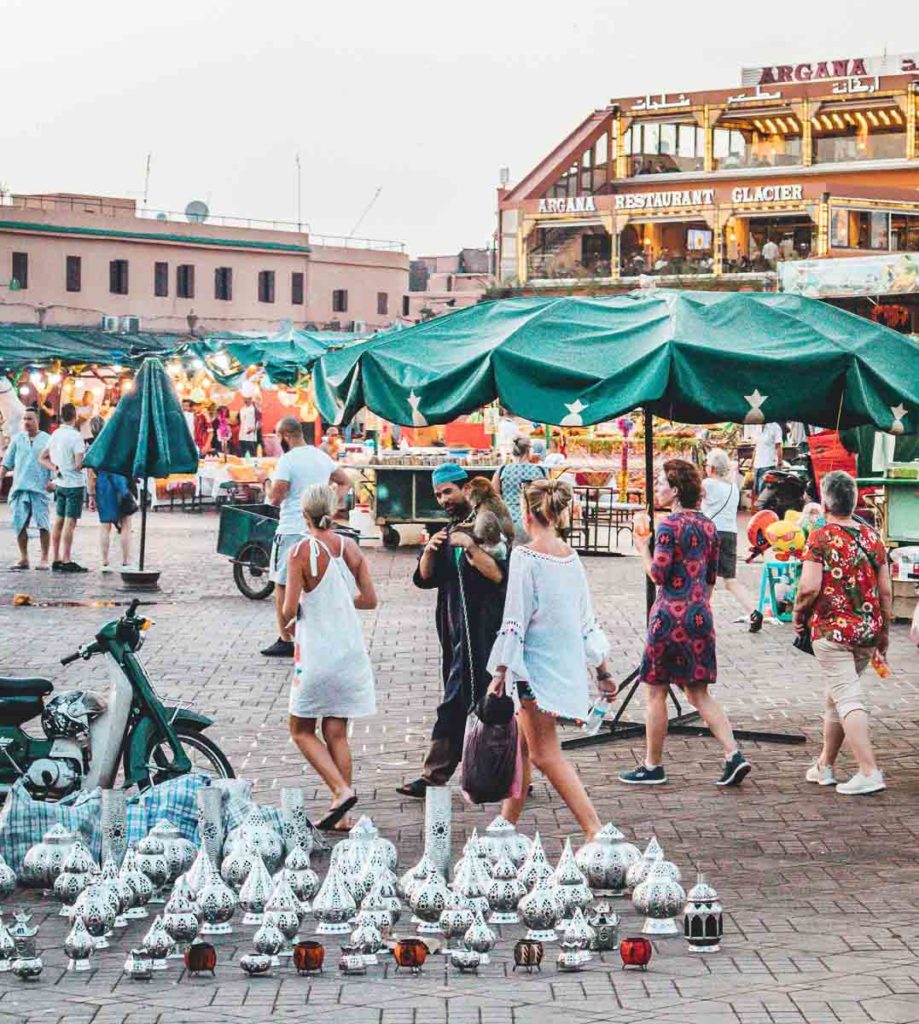
Wide-leg pants, maxi skirts, or airy linen dresses represent ideal choices for your trip. Your tops should cover your shoulders, and you should avoid transparent fabrics. A lightweight scarf or a large shawl is extremely useful because it protects your shoulders from the sun and serves as a head covering when entering the Hassan II Mosque. In strong sunlight, you should also carry a hat and apply high-SPF sunscreen.
Finding the right balance
Locals generally consider the following inappropriate in public spaces: sleeveless tops, leggings worn as pants, or very short shorts. If you prefer shorts, pair them with a longer top that falls over your hips.
Along the coast or inside hotel resorts, however, you will encounter more relaxed dress codes where sleeveless dresses or shorter shorts usually work well. Again, you should dress more modestly when walking through a medina or visiting religious sites. For restaurants and rooftop bars, I suggest a polished and stylish look that doesn’t reveal too much skin. A long summer dress paired with a light scarf looks elegant and shows cultural respect at the same time.
A practical wardrobe mix
For your tops, you should pack T-shirts or blouses with sleeves that cover your shoulders and cleavage. For bottoms, pack wide pants, maxi skirts, or knee-length dresses. A large scarf is your most important accessory for shoulder coverage or as a spontaneous head covering when needed in Casablanca.
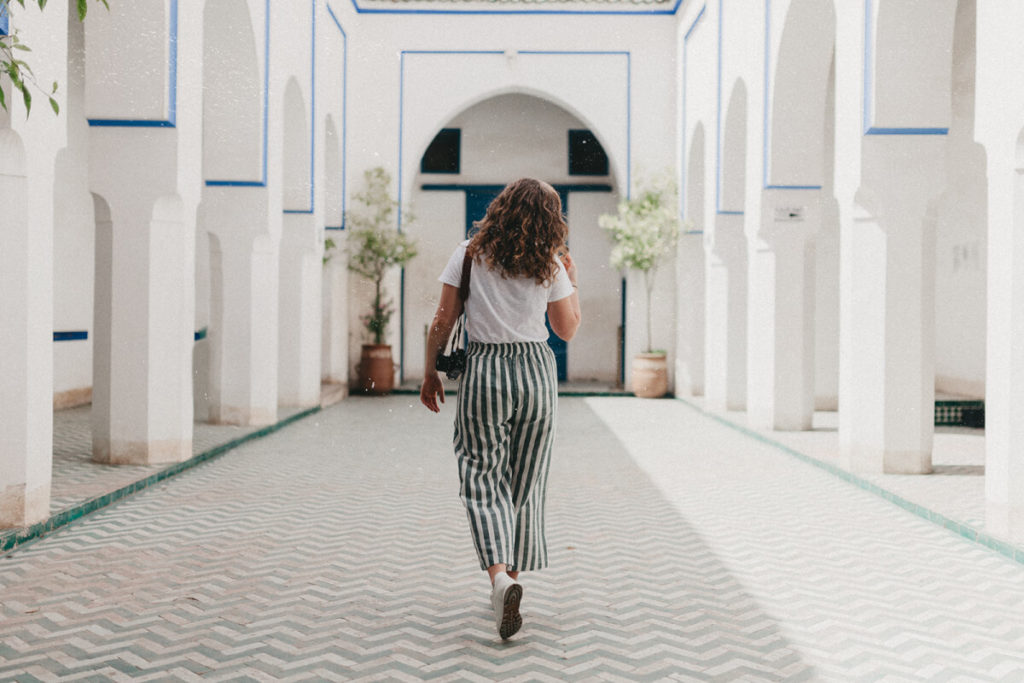
If you like, you can buy traditional clothing directly on-site. Kaftans and djellabas offer a comfortable and elegant way to show appreciation for the local culture, and they make beautiful souvenirs. Please keep in mind that female travelers are not obligated to wear a headscarf in Morocco.
What men should wear in Morocco
Men should also aim for neat and understated clothing during their travels. In the cities, you’ll mostly see locals in jeans, chinos, or polo shirts. Shorts work well in coastal regions or tourist areas as long as they extend at least to your knees. In traditional regions or when you visit religious sites, long pants are the better choice.
In some conservative areas, a simple T-shirt might seem too casual for the occasion. A collared shirt or a polo instead will always create a respectful impression on the people you meet. You should avoid tank tops unless you spend your time directly at the beach or in sports facilities.
Dressing for special occasions
For upscale restaurants or rooftop bars, pair lightweight pants with a shirt or even a blazer for the perfect look. This look ensures that you fit into the more formal atmosphere of these venues while staying comfortable.
Essential accessories for men
I highly recommend wearing a hat or a cap to protect yourself from the intense Moroccan sun. Sunglasses and high-SPF sunscreen are also essential for a safe and pleasant trip.
Beach, pool, and desert
At hotel pools and beaches, you can freely wear bikinis and swimsuits. However, you should avoid extremely revealing styles, such as string bikinis or transparent fabrics, as locals consider them inappropriate. Please remember that nude sunbathing or going topless is illegal in Morocco and can result in substantial fines. Once you leave the pool or beach area, you should immediately cover up with a dress, kaftan, or sarong.
For excursions into the desert or the Atlas Mountains, functionality matters more than fashion. During the day, long, lightweight pants paired with loose shirts will protect you from the sun and blowing sand. Since temperatures drop significantly at night, you should pack fleece layers, a jacket, and warm socks. A large scarf also helps you stay comfortable during dust or wind.
Choosing the right shoes for Morocco
The streets in the medinas are often uneven, dusty, and occasionally slippery. High heels are very impractical in these settings. I suggest solid, flat footwear, such as sneakers, closed sandals, or lightweight hiking shoes, instead.
For your time in the cities, the best choice is comfortable sneakers or slip-ons. For short distances at the beach, you should stick to sandals or flip-flops. If you plan to hike, you will definitely need sturdy trekking shoes with good grip.
Rather than bringing all your sandals from home, you might consider buying handcrafted leather sandals locally. They look beautiful, feel authentic, and serve as a great memento of your trip.
Conclusion on: What to wear in Morocco
Although Morocco does not impose a strict dress code on its visitors, the local culture carries clear expectations. Covering your shoulders and knees is a sign of respect, not a restriction.
The best strategy is simple. Choose airy, well-maintained, and comfortable clothing that suits both the region and the climate. While cities allow a more relaxed style, rural areas and medinas call for longer, more covered outfits. When you visit religious sites such as the Jewish Cemetery in Marrakech or the Hassan II Mosque in Casablanca, you must cover your arms and legs. Women should carry a scarf to cover their heads in these specific locations.
If you follow these straightforward guidelines, you can focus entirely on experiencing the beauty and diversity of Morocco. You’ll feel much more at ease and enjoy a deeper connection with the people you meet along your journey.