Traveling by bus in Morocco is significantly easier, more comfortable, and more reliable than many first-time visitors expect. If you’re traveling between cities like Marrakech, Agadir, Essaouira, or Fès—or heading into regions that are not connected to the rail network—long-distance buses are often the best choice. They take you from A to B affordably, safely, and surprisingly comfortably, especially in southern Morocco, where train connections simply do not exist.
Even as a first-time visitor, you will get around without any issues once you know which operators to rely on.
Contents
CTM and Supratours: the top choice for bus travel in Morocco
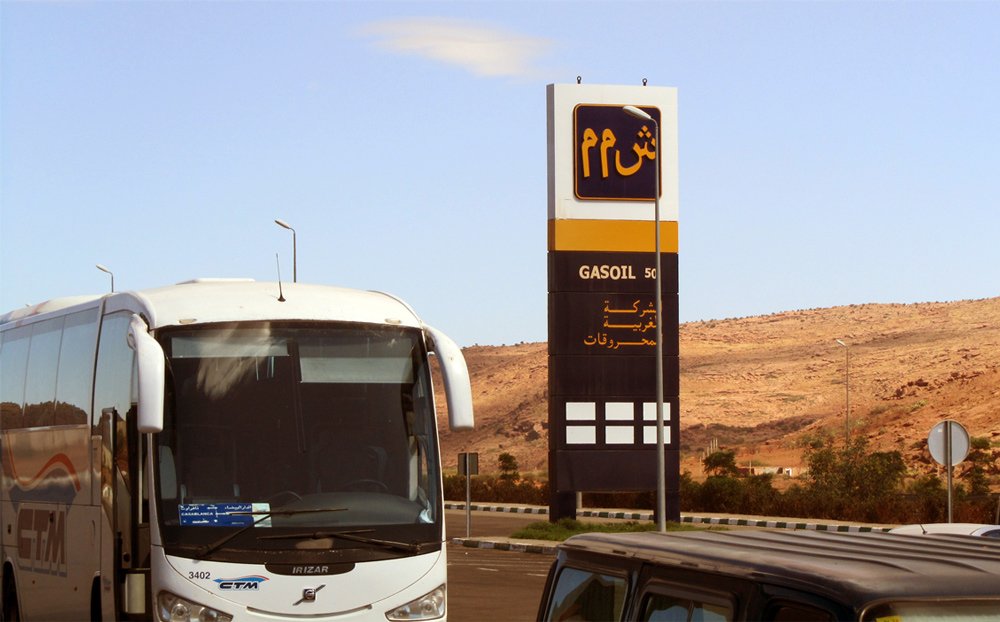
When it comes to reliable bus travel in Morocco, two names come up again and again: CTM and Supratours. Both companies are considered safe, punctual, and well-organized—and have been recommended for years by travelers on forums, in Facebook groups, and on travel blogs. If you want to explore Morocco without renting a car, these two providers are your safest bet. Tickets can be purchased at the counter, online via their websites, or conveniently through their apps. The buses themselves are usually clean and far more comfortable on longer journeys than their reputation might suggest.
CTM is a private company with the most extensive bus network in the country, connecting nearly all major cities. Supratours, on the other hand, is part of the state railway company, ONCF, and works closely with the rail system. Many Supratours buses depart directly from train stations or act as feeder connections, allowing bus and rail travel to integrate seamlessly. Both providers offer multiple daily departures on many routes, often with assigned seating, air conditioning, and generous luggage space.
There are also buses operated by smaller private companies, but these are often older, slower, and less comfortable—though usually a bit cheaper.
Buying bus tickets in Morocco
On popular routes and with major providers like CTM and Supratours, it is worth booking tickets in advance. It is not uncommon for many departures to sell out the day before, especially around Moroccan holidays or on weekends. If your travel dates are fixed, it’s best to secure your ticket early.
Buying tickets via the websites
The most direct option is to book through the bus companies’ official websites. Both CTM and Supratours offer booking forms where you can select routes, departure times, and seats. Payment is made exclusively by credit card. For many travelers, this is straightforward, but it’s worth noting that no alternative payment methods are available here.
- CTM website (Arab., Fren.)
- Supratours website (Arab., Fren.)
Buying tickets via the app
An even more convenient option is booking through an app. The marKoub app is particularly recommended. It is specifically designed for Morocco’s bus network and combines connections from multiple providers, including CTM and Supratours.
You simply choose your departure point, destination, and date, view available journeys, and book your ticket directly on your smartphone. Depending on your settings, payment can be made by credit card, PayPal, or through the app store. After purchase, you will receive a ticket code via email or SMS, which you can show when boarding.
- marKoub Webseite (Arab., Fren., Engl.)
- Android (Play Store)
- iOS (AppStore)
Buying tickets at the counter
If you are already in the country and prefer to book in person, the traditional option of buying tickets at a bus office works just as smoothly. Ticket offices are usually centrally located, often near bus stations or within easy reach of the medina. In Essaouira, for example, the CTM office is located directly between the old town and the beach, making it easy to stop by a few days before your planned departure.
How much does bus travel cost in Morocco?
Traveling by bus in Morocco is the most affordable way to get between cities—and significantly more comfortable than shared taxis. Prices for CTM and Supratours buses vary by distance, but as a rough estimate, you can expect around 40 DH per 100 km.
Example bus fares in Morocco
To give you a general idea of costs, here are typical CTM prices along with approximate travel times for popular routes. Supratours fares are usually very similar, so this overview works well for planning your trip.
| Route | Price (Duration) |
|---|---|
| Agadir – Essaouira | 95 DH (4h) |
| Agadir – Tiznit | 45 DH (2h) |
| Casablanca – Fès | 115 DH (5h) |
| Casablanca – Essaouira | 190 DH (6h) |
| Fés – Chefchaouen | 140 DH (4,5h) |
| Marrakech – Agadir | 120 DH (3h) |
| Marrakech – Casablanca | 95 DH (3h) |
| Marrakech – Essaouira | 95 DH (3h) |
| Marrakech – Ouarzazate | 110 DH (4,5h) |
| Marrakech – Zagora | 160 DH (7h) |
| Meknès – Fès | 30 DH (1h) |
| Nador -Tètouan | 195 DH (10h) |
Luggage costs
With CTM and Supratours, standard travel luggage is included in the ticket price. A large suitcase or backpack is stored in the luggage compartment, while hand luggage can be taken on board. There are no strict weight limits. Only in rare cases—such as with particularly bulky or additional luggage—may a small extra fee apply.
On buses operated by smaller private companies, a small luggage fee (around 5–20 DH) may be charged. However, their overall ticket prices are usually still lower than those of CTM and Supratours.
Supratours and CTM bus stations in Morocco’s major cities
On the map, you can see the locations of CTM and Supratours stations in Morocco’s larger cities. It includes both train and bus stations, as many buses depart directly from railway stations. Some locations have their own dedicated terminals and operate from stations separate from those of private bus companies. The map also features separate layers for CTM and Supratours departure points, allowing you to quickly get an overview of the respective bus stations.
CTM bus station in Casablanca
The CTM bus station is within walking distance of Casa Port and is well connected to taxis and the tram, making it easy to continue your journey to the airport or other parts of the city.
CTM bus station in Chefchaouen
There is no separate CTM station here. Buses depart from and arrive at the central bus station, which is located slightly outside the medina. A taxi is the most practical way to reach the center. Luggage is tagged at the CTM office but remains with you—you are responsible for loading it correctly.
CTM bus station in Fès
The CTM bus station is located in the modern part of the city, outside the medina. A taxi ride takes about 20 minutes and costs around 20 DH per person. The station itself is modern. Luggage can be checked in for a small fee. Toilets are available but require a fee.
CTM bus station in Marrakech
The station is located right next to the main train station, making transfers between rail and bus convenient. The medina is within walking distance, and taxis are readily available. Routes such as Marrakech–Casablanca are served multiple times per day.
CTM bus station in Rabat
Rabat, the capital of Morocco, is a key transport hub. Buses departing from here serve destinations across the country. However, departures are slightly less frequent, as Rabat is also well connected by train, which covers many routes.
CTM bus station in Tangier
The station is located in the newer part of the city. Petit taxis or short walks will quickly take you to other neighborhoods.